Serving Melbourne, FL and Surrounding Areas

Why Your Office AC Isn’t Just a Big Version of Your Home Unit


Scale and Capacity: How Commercial HVAC Differs from Residential
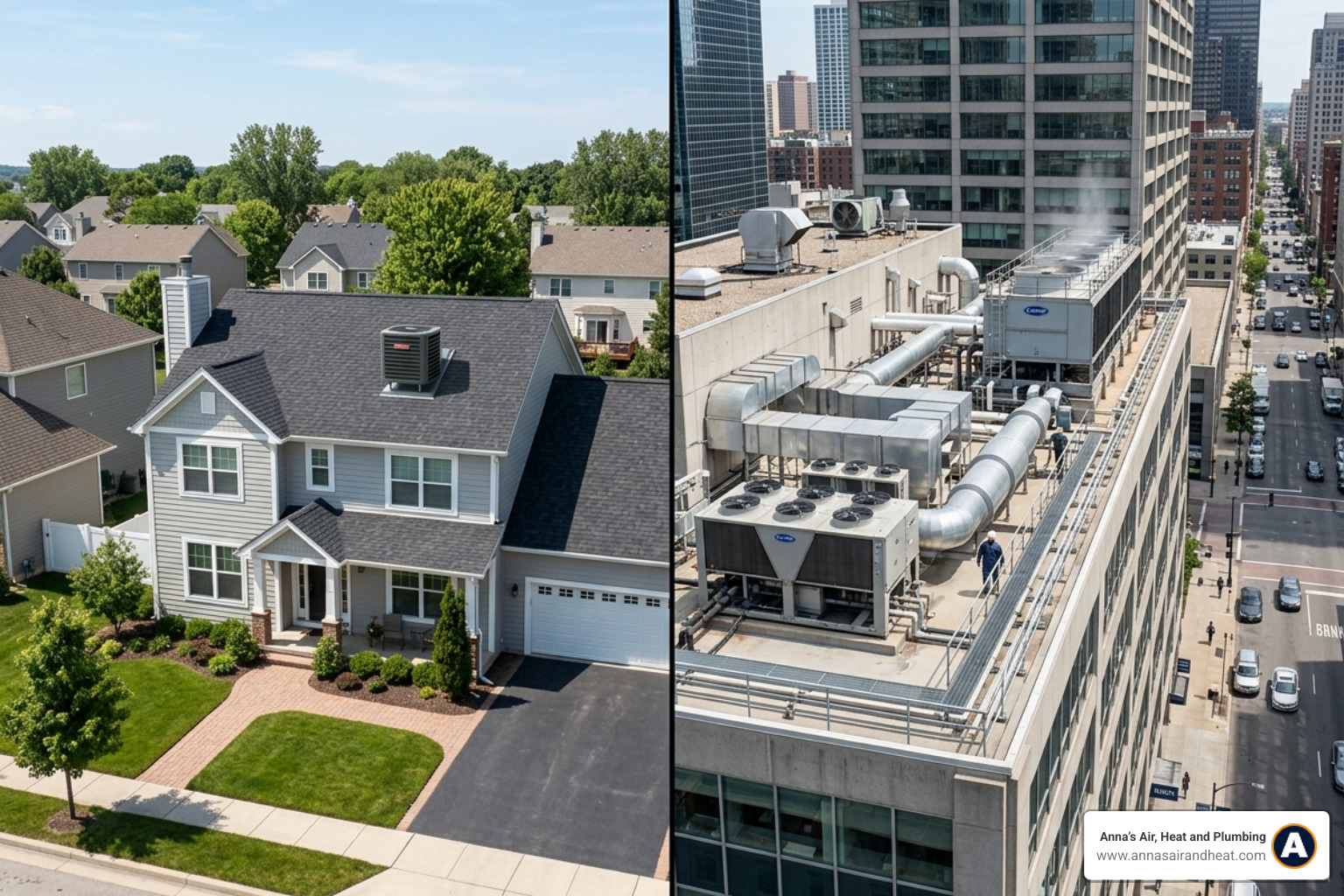
When we talk about the power of an air conditioner, we use the term “tons.” In the HVAC world, a ton isn’t about how much the unit weighs on a scale; it’s a measurement of how much heat the system can remove from a space in one hour. This is where the first major realization of how commercial hvac differs from residential begins.
Most homes in areas like Melbourne or Palm Bay are perfectly comfortable with a system ranging from 1.5 to 5 tons. A standard 1,800-square-foot home usually hums along just fine with a 3-ton unit. However, once you step into the commercial world, those numbers skyrocket. A small boutique might only need a 2-ton unit, but a 40,000-square-foot office building often requires a massive setup totaling 50 tons or more of cooling capacity. Large industrial spaces or shopping centers can even reach several hundred tons.
The reason for this massive jump in capacity isn’t just about square footage. It’s about “heat loads.” In your home, the heat comes from the sun hitting the roof and the few people living there. In a commercial space, you have high occupancy levels—dozens or hundreds of people all generating body heat. You also have “internal gains” from dozens of computers, large-scale lighting, copiers, and perhaps even commercial kitchen equipment or open freezer cases. Commercial systems are designed to fight a constant battle against these internal heat sources that residential units simply never encounter.
If you are managing a business property, you can explore our specialized Commercial HVAC services to ensure your system is sized correctly for these intense demands.
| Property Type | Typical Square Footage | Cooling Capacity Needed |
|---|---|---|
| Average Home | 1,500 – 2,500 sq. ft. | 2 – 5 Tons |
| Small Retail Shop | 1,000 – 3,000 sq. ft. | 2 – 10 Tons |
| Large Office Building | 40,000+ sq. ft. | 50 – 100+ Tons |
| Industrial Warehouse | 100,000+ sq. ft. | Several Hundred Tons |
Design Complexity and Internal Components
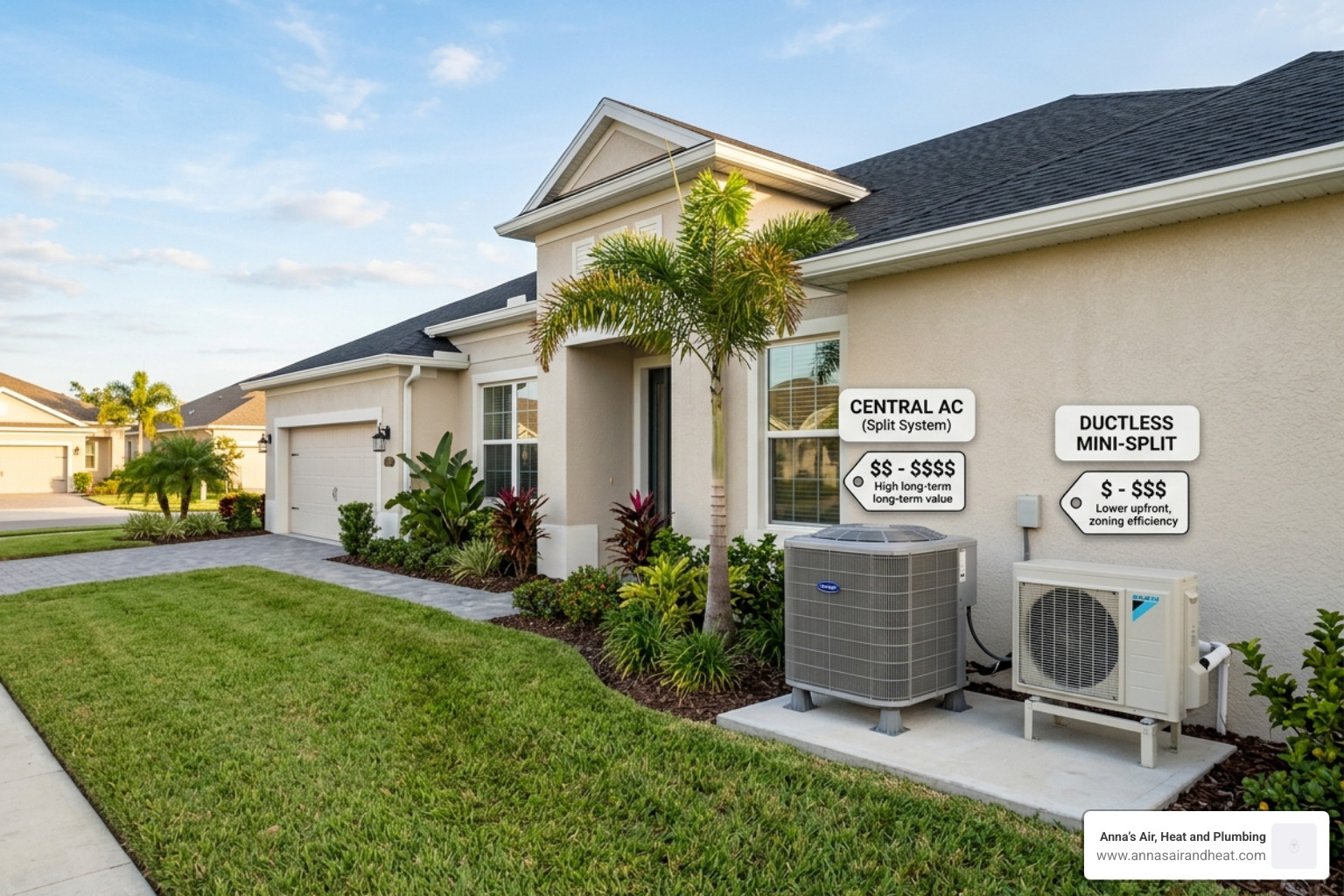
Residential HVAC systems are almost always “split systems.” You have an indoor evaporator coil (usually in a closet or attic) and an outdoor compressor unit sitting in the backyard. They are standalone units; if you need more cooling, you usually have to replace the whole thing with a bigger one.
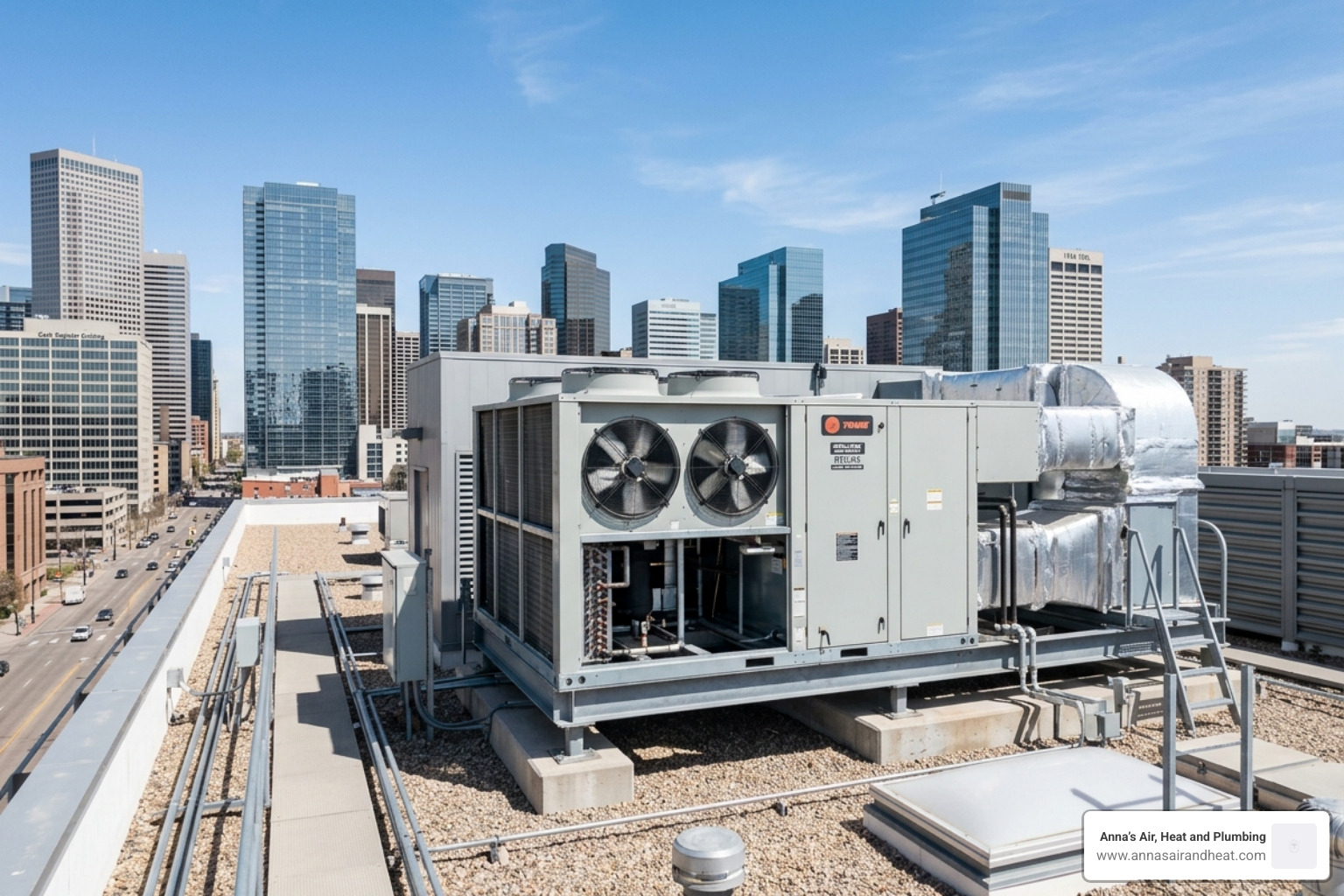
Commercial systems, however, are often modular. Think of them like LEGO sets. Because commercial buildings change—tenants move in, walls are knocked down, or a storage room becomes a server room—the HVAC system needs to be scalable. A modular design allows us to add or remove units to adjust the total capacity without redesigning the entire building’s infrastructure. Most commercial setups are “packaged units,” meaning the evaporator, compressor, condenser, and heating components are all housed in one large metal box, usually located on the roof.
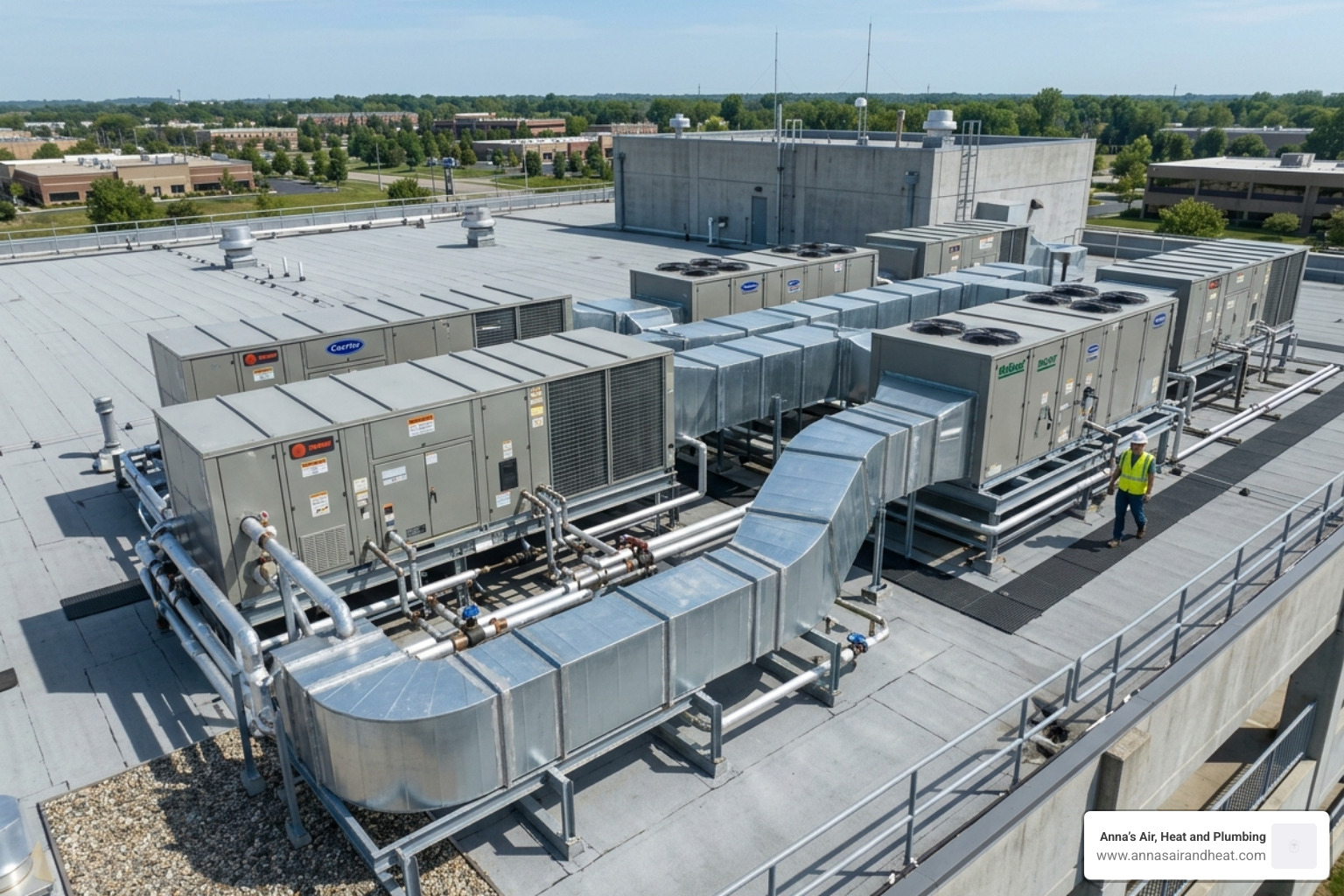
This modularity is a lifesaver for business owners. If one module fails, the others can often pick up the slack, preventing a total business shutdown. If you’re noticing your current setup struggling to keep up with your growing business, there are 7 Reasons to Upgrade Your Commercial HVAC System in Palm Bay, FL that can help you decide if a modular upgrade is the right move.
Why Specialized Expertise Matters for How Commercial HVAC Differs from Residential
You wouldn’t ask a bicycle mechanic to fix a commercial jet engine. While both have wheels and gears, the complexity is worlds apart. The same applies here. Commercial systems involve technical knowledge that goes far beyond residential training.
Technicians working on commercial units must understand:
- System Integration: How the HVAC interacts with building automation systems.
- Customized Equipment: Many commercial systems are custom-built for the specific layout of the building after a detailed professional inspection.
- Multi-zone Thermostats: A single commercial unit might be controlled by ten different thermostats in ten different rooms.
- Solenoid Valves: These are used to precisely control the flow of refrigerant to different zones, ensuring an office on the sunny side of the building stays as cool as one in the shade.
Strategic Placement and Drainage Systems
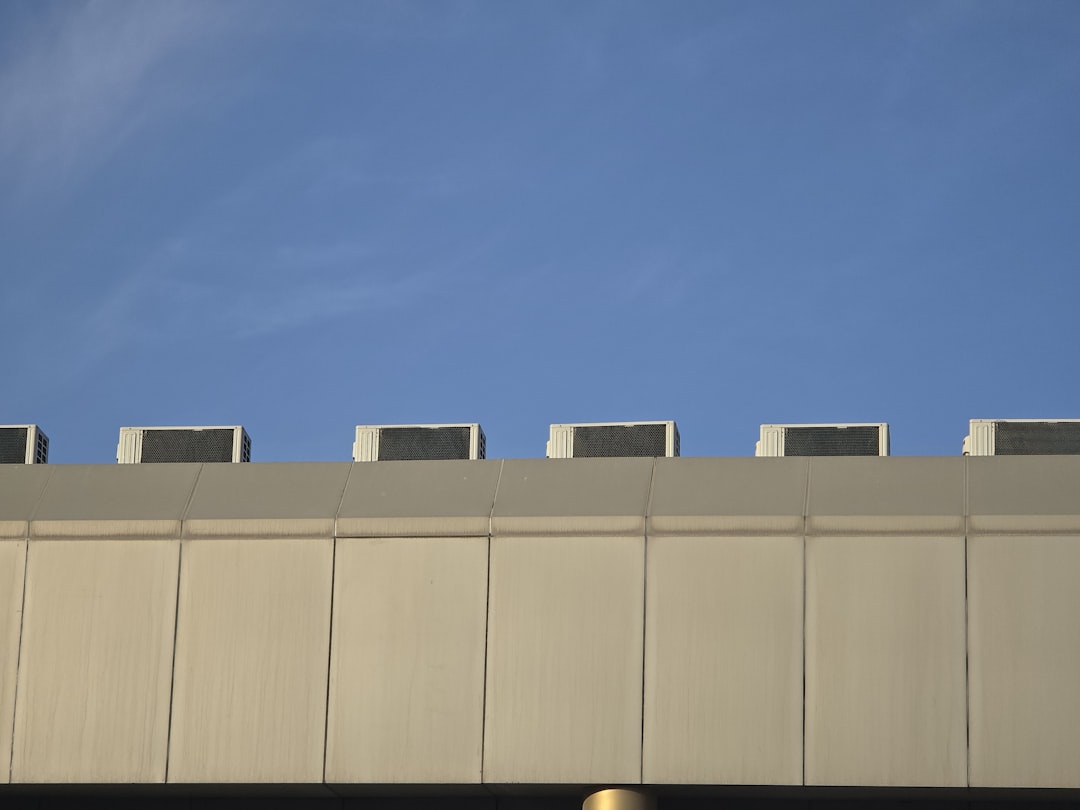
In a typical Melbourne home, the AC unit sits on a plastic or concrete pad in the side yard. In a commercial setting, you’ll almost always find the units on the roof. There are several practical reasons for this “rooftop unit” (RTU) strategy:
- Space Optimization: Land in business districts is expensive. Using the roof saves the ground area for parking or landscaping.
- Noise Pollution: Commercial fans are loud. Moving them to the roof keeps the mechanical roar away from employees and customers.
- Security: Rooftop units are much harder for vandals to access or for copper thieves to target.
- Maintenance Access: Technicians can service the unit without walking through a quiet office or disturbing a meeting.
Managing Moisture in How Commercial HVAC Differs from Residential
Living in Florida, we all know about humidity. When an air conditioner cools the air, it also pulls gallons of water out of it. A residential unit has a single condensate pan and one PVC pipe that drips outside.
Because commercial units are so much larger and run for longer hours (often 24/7 in server rooms or hospitals), they produce a massive amount of moisture. To handle this, commercial drainage systems are much more complex. They utilize multiple drainage pipes, specialized deep-suction pans, and often overflow prevention sensors that can shut the system down if a clog is detected. In a large building, a single clogged drain could cause thousands of dollars in water damage to the floors below, so the “plumbing” side of a commercial HVAC system is heavy-duty.
Power Requirements and Ventilation Strategies
One of the most invisible but critical ways how commercial hvac differs from residential is the electricity it eats. Your home runs on “single-phase” power, typically 120V or 240V. This is plenty for a toaster, a TV, and a 5-ton AC.
Commercial buildings use “three-phase” power. This type of electrical supply is much more consistent and efficient for starting up the massive motors and compressors found in 30-ton units. It provides the “muscle” needed to move huge volumes of air without constantly tripping breakers or wearing out the equipment.
Airflow Distribution in How Commercial HVAC Differs from Residential
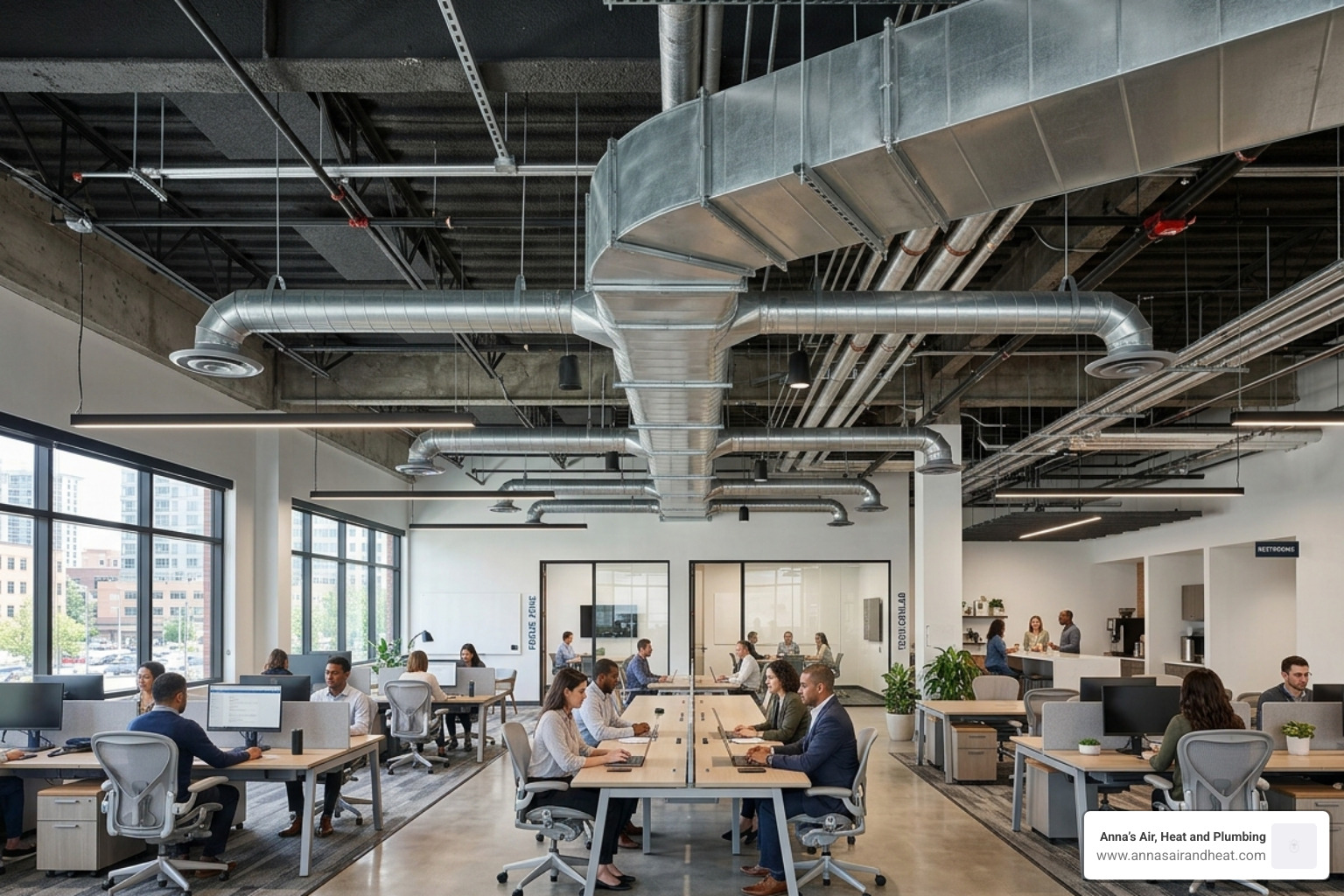
In a house, the fan blows air through ducts, and it comes out of the vents. It’s pretty straightforward. In a commercial building, ventilation is a complex science involving:
- Air Handling Units (AHUs): Large buildings often have AHUs on every floor to distribute air locally.
- Economizers: These “smart” vents can sense when the outdoor air is cool and dry enough (rare in Florida, but it happens!) to be used for cooling, saving the compressor from running.
- Outdoor Air Intake: Building codes require commercial spaces to pull in a specific amount of fresh outdoor air to keep CO2 levels down—something residential systems don’t usually do.
- VAV Systems: Variable Air Volume boxes use dampers to adjust exactly how much air goes into a specific room based on how many people are in it.
Maintenance Frequency and Regulatory Standards
If you skip a year of maintenance on your home AC, you might see a slightly higher bill. If you skip maintenance on a commercial system, you’re looking at a catastrophe.
Commercial systems are under constant stress. While a residential unit might only need a check-up once or twice a year, commercial systems usually require quarterly visits, and high-demand facilities (like restaurants or medical clinics) often need monthly filter changes and inspections. Because these units are modular and complex, a small issue in one component can quickly cascade into a total system failure.
There are also strict regulatory standards to follow. Residential systems are governed largely by the Department of Energy (DOE) and SEER2 efficiency ratings. Commercial systems must comply with ASHRAE 90.1 standards, which dictate everything from energy use to how much fresh air must be circulated. Furthermore, in places like Melbourne and Viera, commercial buildings must meet specific local building codes regarding fire safety and smoke dampers within the ductwork—standards that don’t apply to single-family homes.
Frequently Asked Questions about Commercial vs Residential HVAC
How long do commercial HVAC systems last compared to residential?
Commercial HVAC systems typically last 15–20 years with proper maintenance, whereas residential systems usually last 10–15 years. While commercial units are built with more durable, heavy-duty parts, they also work much harder. In our Florida climate, environmental stressors like salt air in Cocoa Beach or Satellite Beach and high humidity in Palm Bay can shorten these lifespans if preventative maintenance is ignored.
Why are commercial units usually placed on the roof?
As mentioned earlier, it’s all about space, sound, and security. By placing units on the roof, businesses can use their ground-level square footage for more productive things, like extra parking or outdoor seating. It also centralizes the equipment, making it easier for our technicians to perform a full system check without disrupting the workflow inside the building.
How often should a business schedule HVAC maintenance?
At a minimum, we recommend quarterly inspections for commercial properties. However, for high-demand facilities like gyms, medical offices, or restaurants, monthly filter changes and belt inspections are often necessary. Regular maintenance ensures operational efficiency and helps catch small leaks or electrical issues before they turn into expensive emergency repairs that force you to close your doors for the day.
Conclusion
At the end of the day, your office AC isn’t just a “big brother” to your home unit—it’s a completely different animal. From the three-phase power it draws to the modular way it’s built and the rooftop it sits on, commercial HVAC is a specialized field that requires a specialized touch.
At Anna’s Air, Heat and Plumbing, we understand the unique challenges that business owners in Melbourne, Palm Bay, and the surrounding Brevard County areas face. As a woman-owned business, we pride ourselves on building trust through transparency and reliability. Whether you need a same-day install for a new commercial unit or a rigorous preventative maintenance plan to protect your investment, we are here to help. We stand behind our work with a 365-day money-back guarantee because we believe your comfort and peace of mind are non-negotiable.
Don’t leave your business’s climate control to chance. Schedule your professional commercial HVAC service today and experience the difference that expert, local care can make.
The Trusted Experts for All Your Comfort Needs
Call our comfort advisors today to experience the care and expertise that make Anna’s Air, Heat & Plumbing a trusted name in home comfort. Our team is ready to help you enjoy reliable service, lasting comfort, and savings you can feel.