Serving Melbourne, FL and Surrounding Areas

The Ultimate Checklist for Choosing the Right Commercial HVAC Provider



Why Choosing the Right Commercial HVAC Provider Can Make or Break Your Business
Choosing the right commercial HVAC provider is one of the most important decisions you’ll make as a business owner or facility manager. In the commercial landscape of 2026, your HVAC system is more than just a comfort feature; it is a critical piece of infrastructure that supports your entire operation. Get it right, and your building stays comfortable, your energy bills stay manageable, and your operations run without disruption. Get it wrong, and you’re looking at system failures, costly emergency calls, and unhappy employees or customers who may choose to take their business elsewhere.
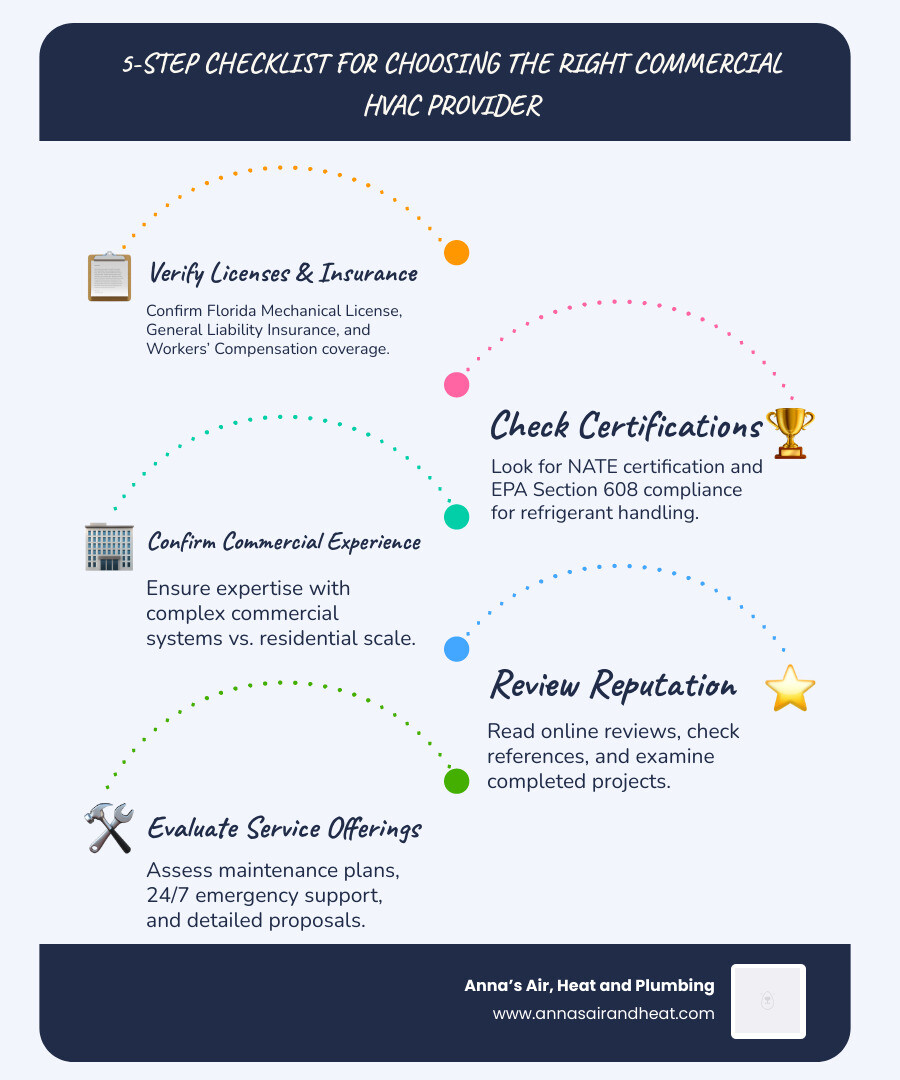
Here’s a quick checklist to guide your decision:
- Verify licenses and insurance – Confirm a valid Florida Mechanical License, General Liability Insurance, and Workers’ Compensation coverage
- Check certifications – Look for NATE certification and EPA Section 608 compliance
- Confirm commercial experience – Commercial systems are far more complex than residential; specialization matters
- Review reputation – Read online reviews, ask for references, and look at completed projects
- Assess service offerings – Ensure they provide maintenance plans, emergency support, and 24/7 availability
- Request detailed written proposals – No verbal agreements; everything should be documented and itemized
- Evaluate long-term support – Ask about warranties, scalability for multiple locations, and ongoing maintenance
The U.S. commercial HVAC market is projected to reach $49.7 billion by 2030, and a rapidly growing industry means more providers entering the market — not all of them qualified. In Melbourne, FL, where summer heat, high humidity, and coastal salt air put serious demands on commercial systems, the stakes are even higher. This guide walks you through every step of vetting and selecting a provider you can trust for the long haul, ensuring your facility remains a productive and welcoming environment for everyone who enters.
Essential Qualifications and Legal Compliance
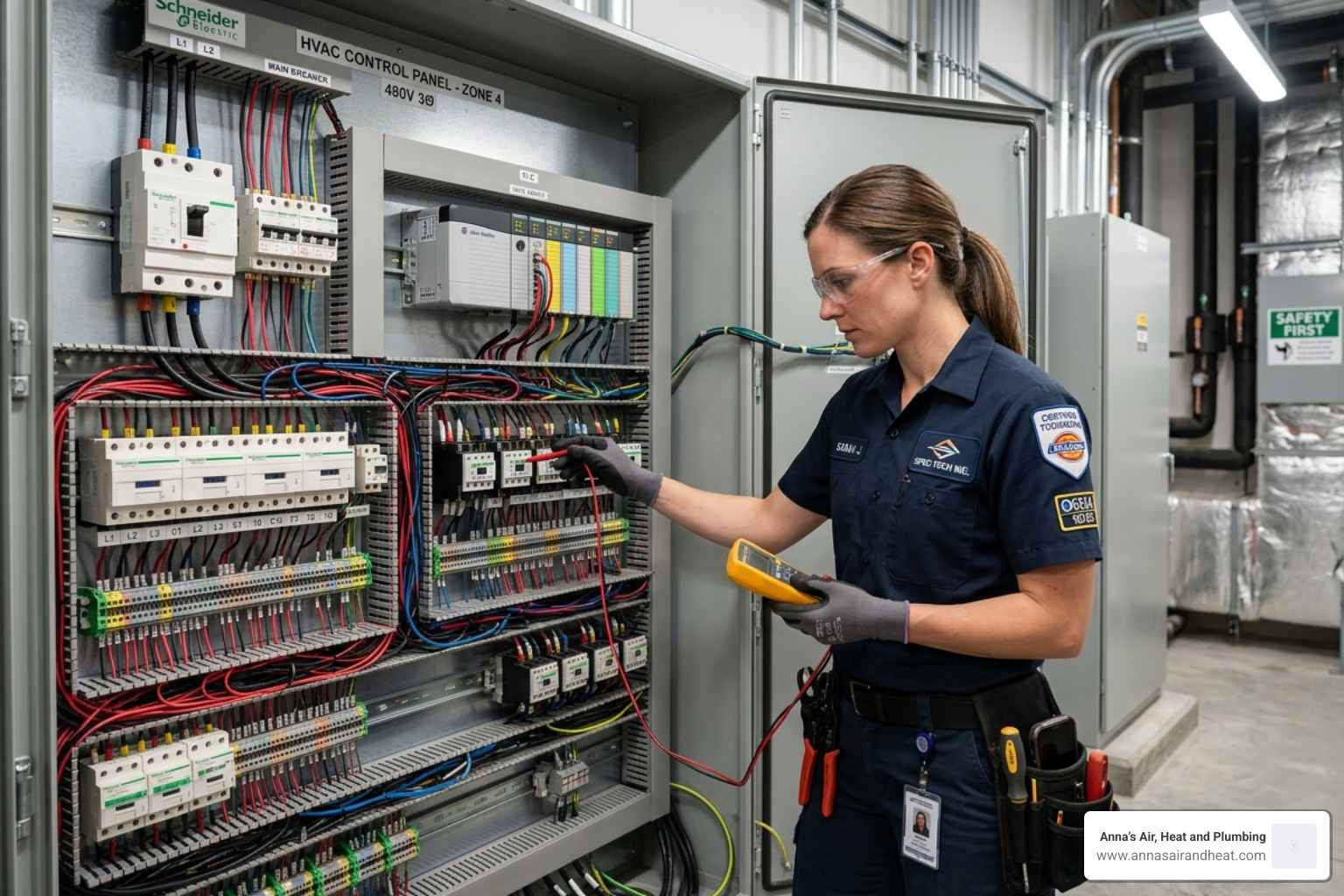
When it comes to choosing the right commercial HVAC provider, the first step isn’t looking at the price tag—it’s looking at the paperwork. In Florida, the legal requirements for working on large-scale mechanical systems are strict for a reason. Commercial systems handle massive amounts of refrigerant, high-voltage electricity, and complex ventilation needs that can impact the safety of everyone in your building.
Licensing and Insurance
Any contractor we hire should hold a valid Florida Mechanical License. This isn’t just a suggestion; it’s a legal mandate designed to protect property owners. Beyond the license, verify that they carry General Liability Insurance and Workers’ Compensation. In a commercial setting, technicians often work on high roofs or with heavy machinery. If a technician is injured on your property or if a botched repair causes a flood in your server room, you don’t want your business to be held liable for the damages. Proper insurance coverage shifts that risk away from your company.
Technical Certifications
Look for the “gold standards” of the industry:
- NATE Certification: North American Technician Excellence is the most recognized certification for technicians. It proves they have passed rigorous testing on real-world HVAC knowledge, covering everything from airflow dynamics to electrical troubleshooting.
- EPA Section 608 Certification: This is legally required for any technician who maintains, services, or repairs equipment that could release refrigerants into the atmosphere. With the industry moving toward more environmentally friendly refrigerants, this certification ensures your provider is up to date on the latest handling protocols.
By choosing a provider with these credentials, you ensure your building remains in compliance with the Florida Building Code and environmental regulations. Our HVAC Services are built on these exact pillars of safety and professional integrity.
Evaluating Industry Experience and Local Reputation
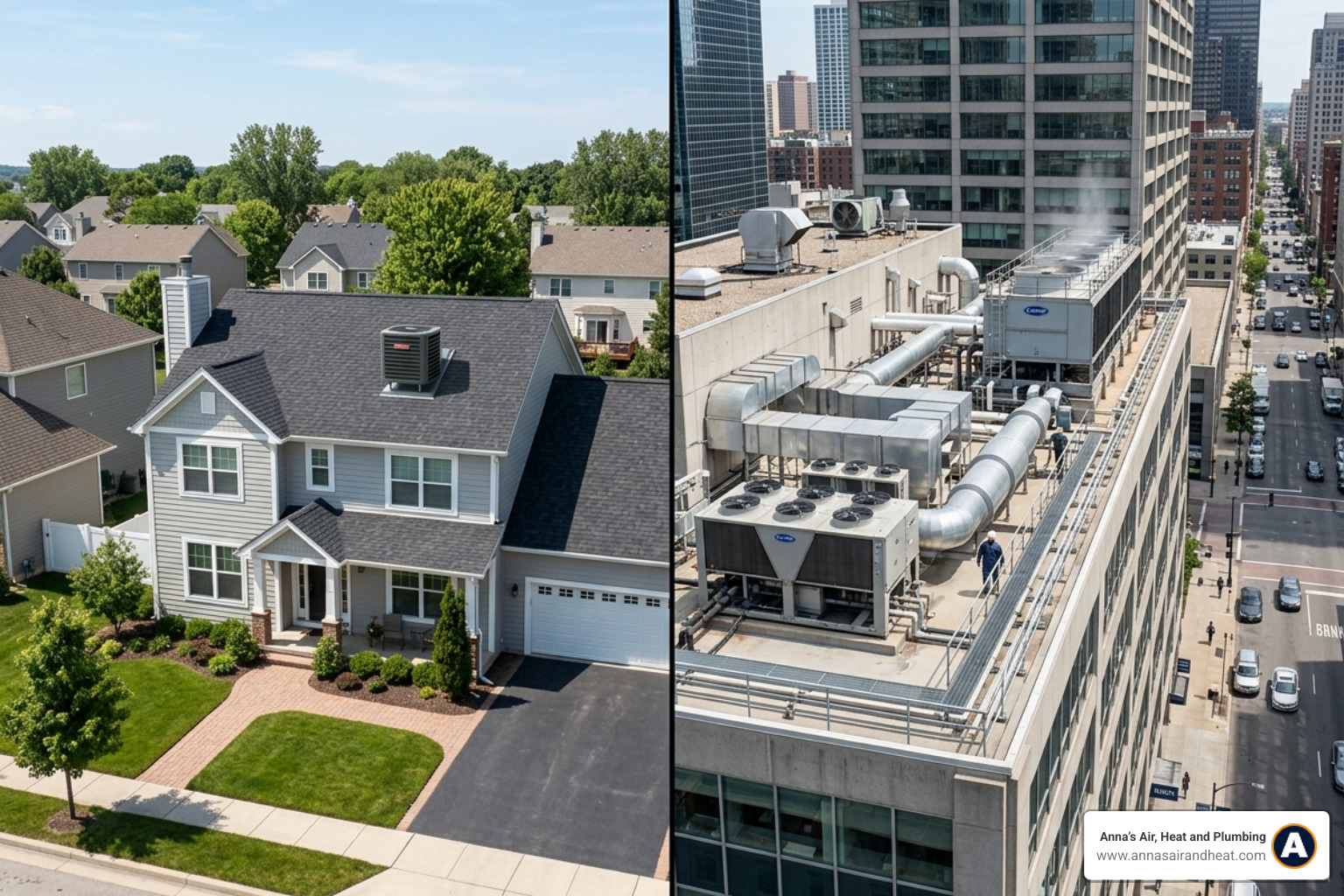
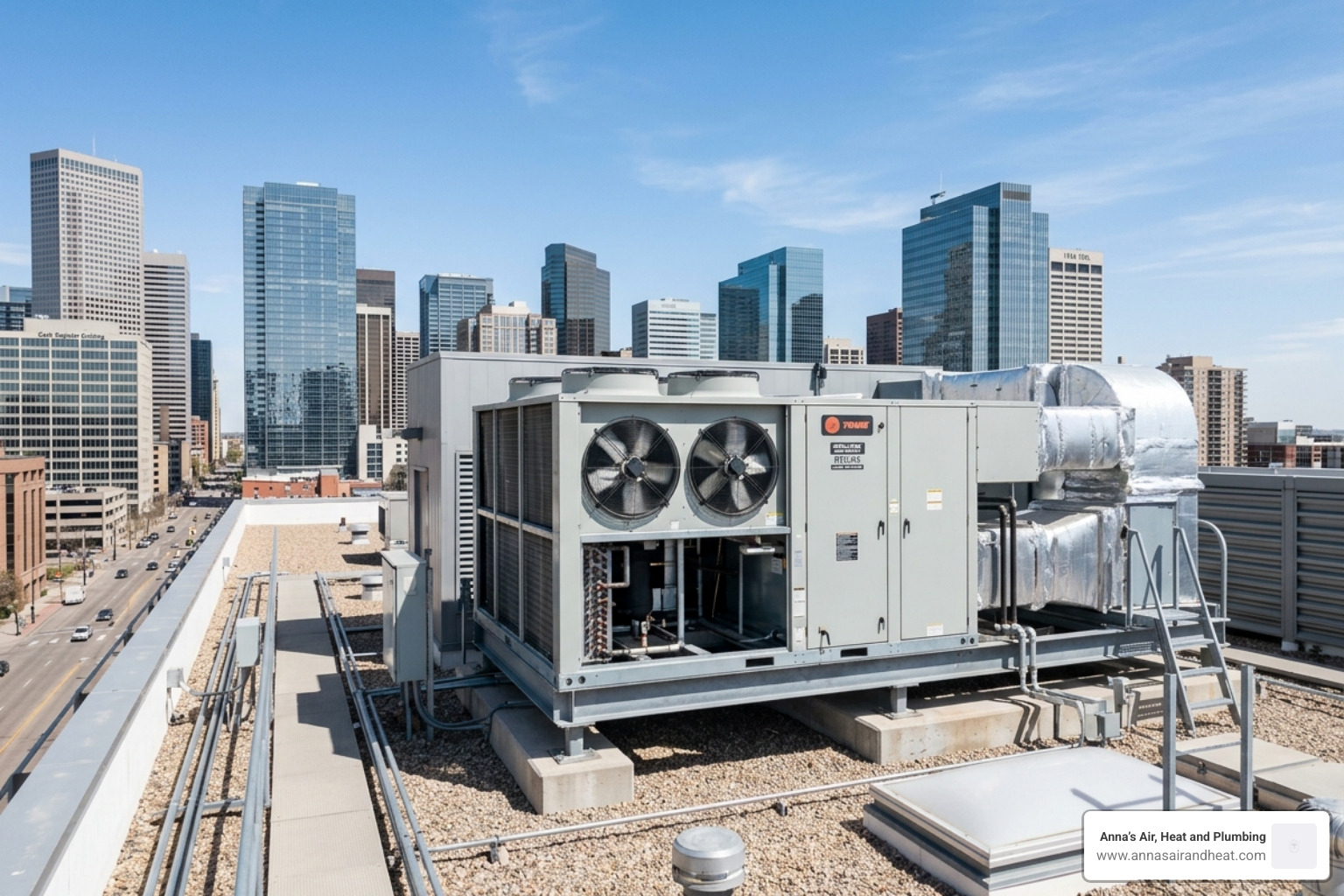
A company might be great at fixing a home air conditioner, but commercial systems are a different beast entirely. Residential units are usually split systems or small packages; commercial systems involve massive rooftop units (RTUs), chillers, cooling towers, and intricate VAV (Variable Air Volume) boxes that require a specialized skill set to maintain.
Why Specialization Matters When Choosing the Right Commercial HVAC Provider
Commercial HVAC requires a deep understanding of “zoning.” In a large office or retail space, one area might need cooling while another needs ventilation only. A specialized provider understands how to balance these loads to prevent “hot and cold” calls from tenants. This involves calibrating dampers, checking sensors, and ensuring the building automation system is communicating correctly with every component. If you’re curious about what else to look for, check out these 5 Things to Ask Before Choosing an HVAC Contractor in Melbourne, FL.
The “Salt Air” Factor in Florida
In places like Cocoa Beach and Satellite Beach, the salt air is a silent killer for HVAC equipment. It eats through copper coils and corrodes electrical connections faster than you can say “humidity.” When choosing the right commercial HVAC provider, ensure they have a local presence and understand how to apply corrosion-resistant coatings and marine-grade components to extend your system’s life. A provider from inland may not realize how quickly a standard unit will fail without these specific protections.
Checking the Track Record
Don’t just take a salesperson’s word for it. Dig into their Reviews and look at their Recent Projects. A reputable company should be able to provide references from other local businesses that have similar facility needs to yours, whether you manage a retail strip in Viera or a medical office in Melbourne.
Assessing Emergency Readiness When Choosing the Right Commercial HVAC Provider
If your AC goes out in a restaurant on a Friday night in July, you don’t have until Monday morning to wait for a fix. You need to know your provider’s emergency response time. A top-tier Commercial HVAC partner offers 24/7 availability and has a fleet large enough to respond when you’re in a pinch, minimizing your downtime and protecting your inventory, electronics, and reputation.
Strategies for Choosing the Right Commercial HVAC Provider for Long-Term Efficiency
Smart business owners know that the real cost of an HVAC system isn’t the installation—it’s the operation. Energy efficiency and indoor air quality (IAQ) directly impact your bottom line through utility bills and employee productivity.
| Feature | Reactive Repairs (Wait for Break) | Proactive Maintenance (Planned) |
|---|---|---|
| System Lifespan | Significantly shortened | Maximized (15+ years) |
| Energy Bills | 20-40% higher due to strain | Optimized and consistent |
| Business Downtime | Unpredictable and frequent | Minimized/Scheduled |
| Air Quality | Poor (clogged filters/mold) | High (clean coils/filters) |
Efficiency and IAQ
With the global HVAC market reaching nearly $300 billion by 2028, technology is moving fast. High-efficiency units with better SEER (Seasonal Energy Efficiency Ratio) ratings can pay for themselves in just a few years through energy savings. Furthermore, proper humidity control is essential in Florida to prevent mold growth, which is a major liability for any business. High humidity doesn’t just make people uncomfortable; it can damage drywall, electronics, and inventory.
There are at least 7 Reasons to Upgrade Your Commercial HVAC System in Palm Bay, FL, including the transition to sustainable, low-GWP refrigerants and smart building integration. Modern systems allow for remote monitoring, meaning your provider can often diagnose a problem before you even notice the temperature rising in your building.
Identifying Red Flags and Avoiding Common Pitfalls
As you go through the process of choosing the right commercial HVAC provider, keep an eye out for these warning signs:
- The “Van and a Ladder” Setup: If a company lacks a physical office or a local service hub, they might disappear when you need warranty work or emergency support during a storm.
- Verbal-Only Agreements: If it isn’t in writing, it doesn’t exist. Demand detailed, itemized proposals that outline the scope of work, equipment models, and timelines. This protects both parties and ensures expectations are clear.
- High Technician Turnover: If you see a different person every time you call, the company may lack the internal stability to manage a complex commercial account. Consistency in technicians means they become familiar with your specific building’s quirks.
- Refusal to Discuss Money: While we don’t focus on specific numbers here, a good provider should offer clear paths for Financing and be transparent about how their maintenance plans work.
- Lack of Specialized Tools: Commercial systems require specialized diagnostic tools and heavy-duty equipment. If a provider shows up without the proper gear to handle a rooftop unit, it’s a sign they aren’t truly equipped for commercial work.
Frequently Asked Questions About Commercial HVAC Providers
How often should a commercial HVAC system be professionally serviced?
In the Florida climate, we recommend a minimum of two major inspections per year—typically in the spring and fall. However, high-traffic businesses like restaurants or medical facilities may need quarterly filter changes and coil cleanings to maintain air quality and efficiency. Regular service ensures that small issues, like a worn belt or a clogged drain line, don’t turn into catastrophic failures during a heatwave.
What is the difference between a service agreement and a one-time repair?
A one-time repair is a “band-aid” fix for a specific problem. A service agreement is a long-term partnership. It includes planned maintenance, priority scheduling during emergencies, and asset history tracking. Knowing exactly when a part was last replaced helps us predict and prevent failures before they happen, allowing you to budget for replacements rather than being surprised by them.
Why is local expertise important for Florida businesses?
Florida has unique building codes and environmental challenges. A local provider knows the specific drainage requirements to prevent indoor flooding from condensate and understands the rapid response needed to combat our 90-degree-plus days. Furthermore, local providers are familiar with the permitting processes in municipalities like Melbourne and Palm Bay, which can speed up the installation of new equipment.
Conclusion
At Anna’s Air, Heat and Plumbing, we understand that your business relies on a comfortable environment to thrive. As a woman-owned business serving the Space Coast—from Melbourne and Palm Bay to Cocoa Beach and Viera—we prioritize trust, transparency, and rapid response. We know that when your AC is down, your business is at a standstill, and we are committed to getting you back up and running as quickly as possible.
We stand behind our work with a 365-day money-back guarantee and offer same-day new system installs to keep your business moving. When you are ready to stop worrying about your air conditioning and start focusing on your customers, we are here to help. Our team is dedicated to providing the highest level of service to our local business community.
Learn more About Us or Contact Us today to see how we can support your facility.
The Trusted Experts for All Your Comfort Needs
Call our comfort advisors today to experience the care and expertise that make Anna’s Air, Heat & Plumbing a trusted name in home comfort. Our team is ready to help you enjoy reliable service, lasting comfort, and savings you can feel.