Serving Melbourne, FL and Surrounding Areas

Don’t Let Your RTU Fail with These Maintenance Requirements


Why Commercial HVAC Maintenance Requirements Can Make or Break Your Business
Commercial HVAC maintenance requirements include a structured set of tasks — from monthly filter changes to biannual professional tune-ups — designed to keep your system running safely, efficiently, and within regulatory standards.
Here is a quick overview of what those requirements look like:
| Frequency | Key Tasks |
|---|---|
| Monthly | Inspect and replace air filters; check condensate drains; visual system inspection |
| Quarterly | Clean condenser and evaporator coils; inspect belts; check refrigerant levels; test electrical connections |
| Biannually | Full professional tune-up; refrigerant leak check; thermostat calibration; lubricate motors |
| Annually | Heat exchanger inspection; burner combustion test; full system controls verification; EPA Section 608 compliance review |
| Seasonally | Spring cooling prep; Fall heating prep; economizer testing; safety controls check |
For most commercial buildings, the minimum standard is two professional service visits per year — typically in spring before cooling season and in fall before heating season.
Now, here is why this matters so much.
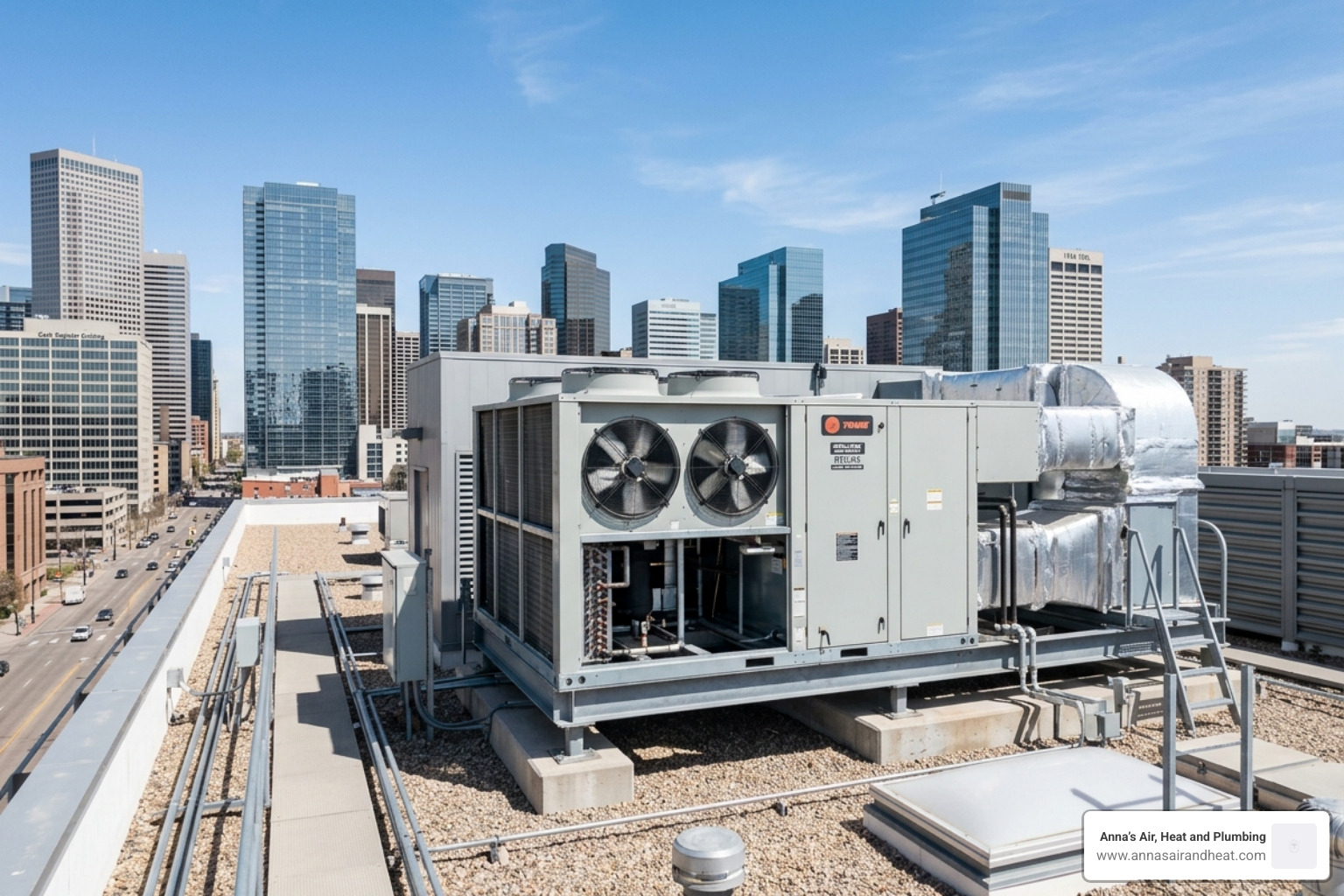
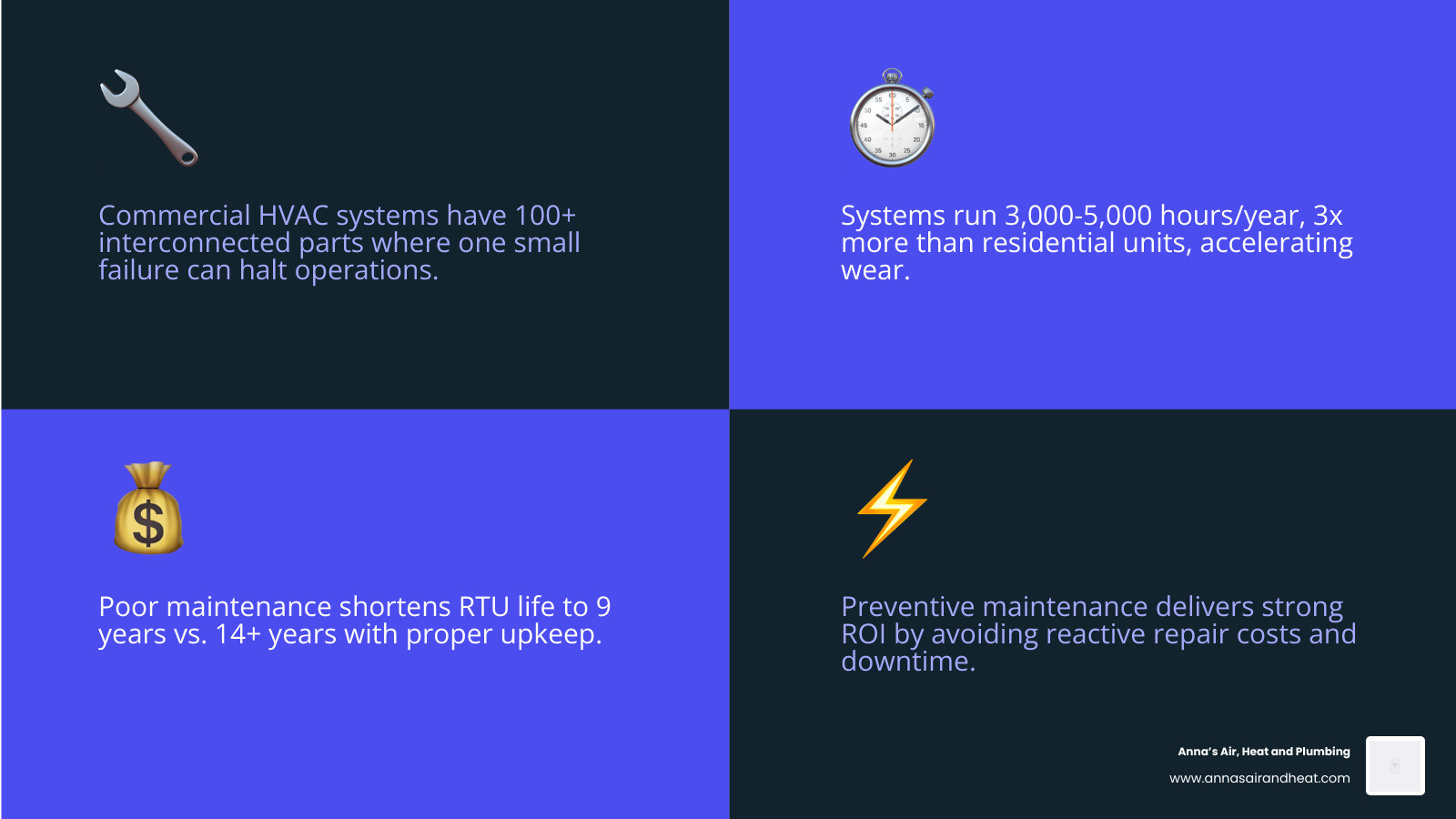
Modern commercial HVAC systems contain more than 100 interconnected parts. They run anywhere from 3,000 to 5,000 hours per year — roughly three times more than a typical residential unit. That kind of workload creates wear, buildup, and stress on components that simply cannot be ignored.
A poorly maintained 20-ton rooftop unit can fail in as little as nine years. A well-maintained one can reach 14 years or beyond. That is not a small difference — that is years of avoided replacement costs and unplanned downtime.
For businesses in Melbourne, FL, where heat and humidity push systems hard for much of the year, staying on top of these requirements is not optional. It is how you protect your investment, your people, and your operations.
Understanding Commercial HVAC Maintenance Requirements
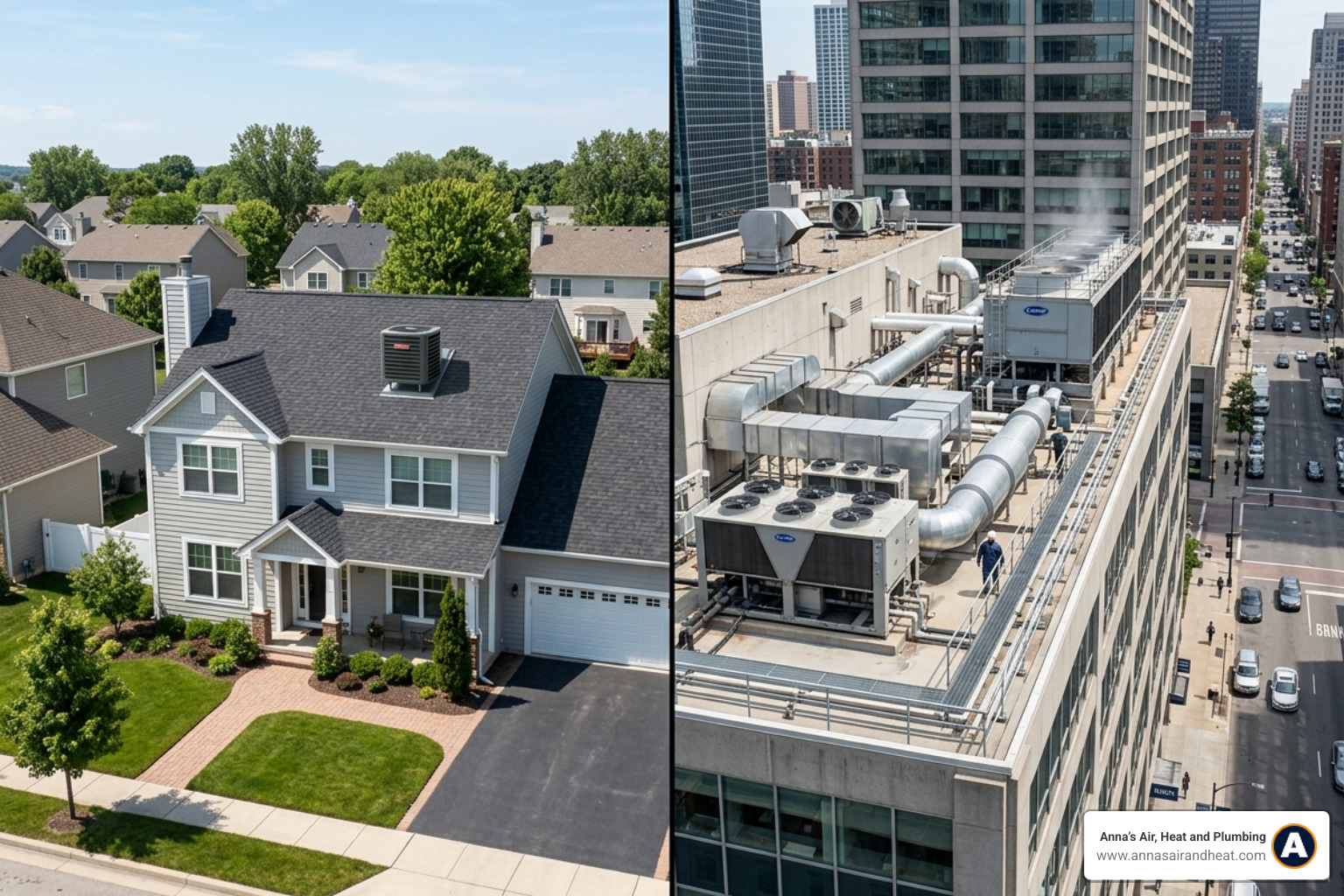
When we talk about Commercial HVAC systems, we aren’t just talking about a bigger version of a home AC. These are industrial-grade machines with over 100 interconnected parts, ranging from massive rooftop units (RTUs) and air handlers to complex chillers and boilers.
The complexity of these systems means that a failure in one small component, like a $50 belt or a clogged sensor, can trigger a domino effect that shuts down an entire floor of an office building or halts a production line. In April 2026, business operational continuity depends more than ever on climate control. Whether you are managing a retail space in Palm Bay or a medical facility in Viera, your HVAC system is likely the single largest consumer of energy in your building, often accounting for nearly 40% of total utility usage.
The primary driver behind strict commercial hvac maintenance requirements is the sheer volume of run hours. While a residential unit might run for 750 to 1,500 hours a year, a commercial system often clocks between 3,000 and 5,000 hours. This constant operation makes HVAC Maintenance an essential form of asset protection. Beyond just keeping people cool, regular service ensures proper humidity control—critical for preventing mold in our Florida climate—and maintains the thermal comfort necessary for employee productivity.
Essential Components of a Commercial HVAC Maintenance Checklist
A “quick look” at your unit isn’t enough to meet professional standards. A comprehensive program involves a tiered approach, addressing different components at specific intervals to prevent the 15% efficiency loss typically caused by airflow problems.
Monthly and Quarterly Commercial HVAC Maintenance Requirements
The most frequent tasks are often the most ignored, yet they are the easiest way to prevent a mid-summer breakdown.
- Air Filter Replacement: In high-occupancy environments or dusty areas, filters should be inspected monthly and replaced at least every quarter. Clogged filters force the blower motor to work harder, increasing energy waste by 10% to 40%.
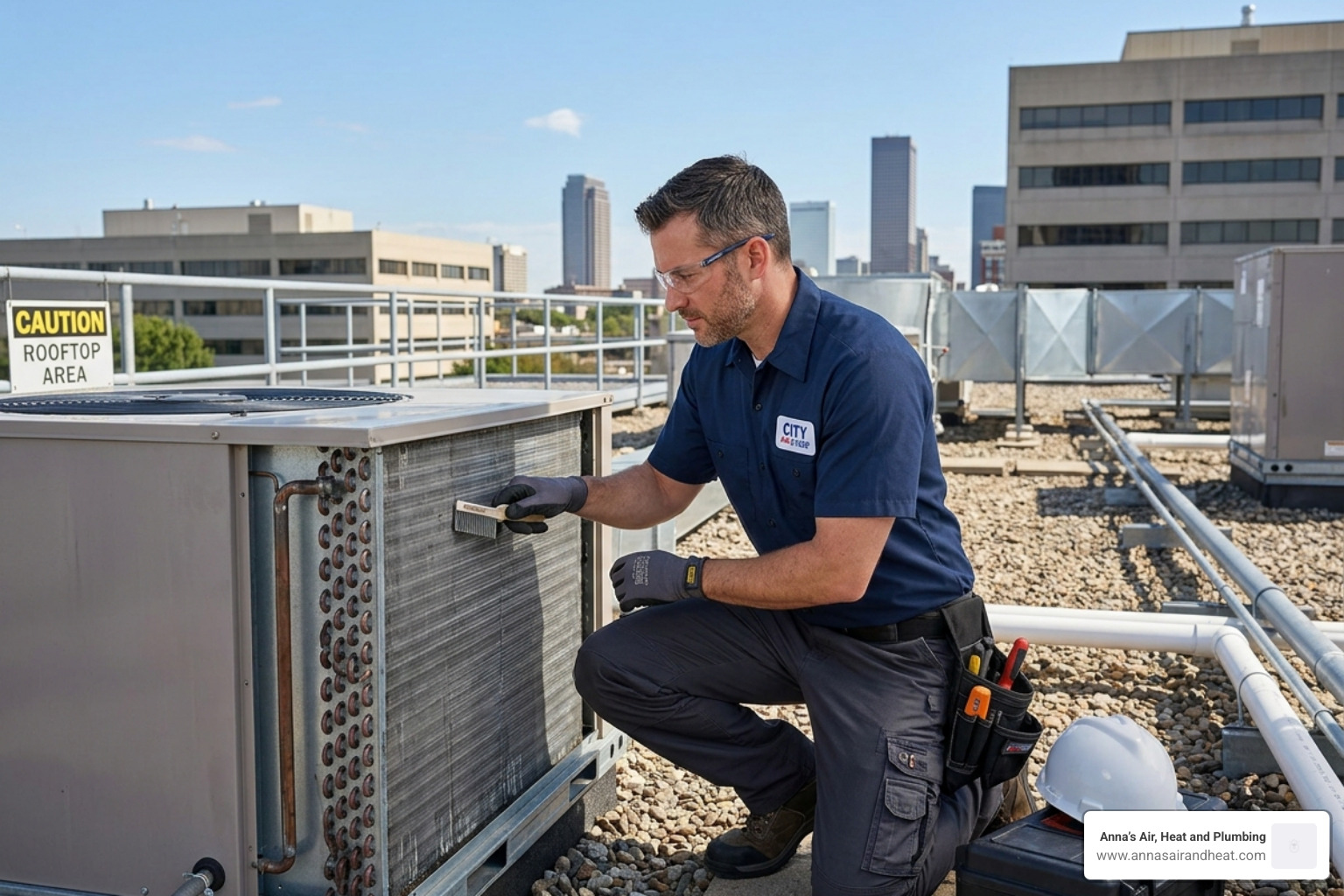
- Coil Cleaning: Condenser and evaporator coils dissipate heat. When they are coated in Florida sand, pollen, or dust, the system runs longer and hotter. Quarterly cleaning is a baseline requirement for efficiency.
- Belt and Pulley Inspection: Commercial fans are often belt-driven. We look for fraying, cracking, or “glazing.” Replacing a worn belt proactively prevents the sudden “clanging” or “clicking” sounds that signal an imminent shutdown.
- Drain Line Clearing: Algae and debris love our humidity. Clearing condensate drains prevents water damage and high-humidity alarms.
- Moving Parts Lubrication: Reducing friction in motors and bearings not only saves electricity but significantly extends the life of the equipment.
- Economizer Testing: We check that dampers are moving freely to ensure you aren’t pulling in hot, humid air when the system should be recirculating conditioned air.
Understanding the Benefits of Timely AC Repairs and Maintenance means realizing that these small quarterly steps can add five or more years to your equipment’s total lifespan.
Annual and Seasonal Commercial HVAC Maintenance Requirements
As we move into 2026, seasonal preparation remains the gold standard for facility management. We recommend a “Spring Cooling Prep” and a “Fall Heating Prep” to ensure the system is ready for the upcoming shift in demand.
Spring Cooling Prep:
- Refrigerant Level Checks: We verify that levels are optimal. Low refrigerant is often a sign of a leak, which must be addressed under EPA Section 608 regulations if your system holds more than 50 pounds of gas.
- Electrical Tightening: Heat causes wires to expand and contract, which can loosen connections. We measure voltage and current to ensure motors aren’t over-amping.
- System Starting Cycle: We verify that the controls start and stop the system in the correct sequence to avoid “short-cycling.”
Fall Heating Prep:
- Heat Exchanger Inspection: For gas-fired RTUs, we check for cracks that could leak carbon monoxide into the building.
- Burner Combustion: We test the burner to ensure clean, efficient combustion and proper gas pressure.
- Safety Controls: Testing limit switches and safety sensors ensures the system will shut down safely if it overheats.
Following ASHRAE 180 standards provides a professional roadmap for these tasks, ensuring your building stays compliant with modern safety and energy codes.
Warning Signs Your System Needs Immediate Service
Even with a plan in place, systems can occasionally struggle. Being able to spot the warning signs can save you from a total “red-line” failure.
- Uneven Temperatures: If the conference room is a sauna while the lobby is an icebox, your dampers or zoning controls are likely failing.
- Rising Utility Bills: A sudden spike in energy costs without a change in weather usually points to dirty coils or a failing compressor.
- Unusual Noises: Clanging, clicking, or squealing usually indicates a mechanical failure in the belts, bearings, or blower assembly.
- Frequent Cycling: If the unit turns on and off every few minutes, it is “short-cycling,” which is a fast track to a burnt-out motor.
- Poor Airflow: This is often a sign of a severely clogged filter or a failing blower motor.
- Ice on Coils: If you see ice on your RTU in the middle of a Melbourne summer, you likely have a refrigerant leak or zero airflow.
- Thermostat Inaccuracies: If the wall unit says 72 but the room feels like 80, your sensors or Building Automation System (BAS) need calibration.
If you are noticing these issues frequently on an older unit, it might be time to look at the 7 Reasons to Upgrade Your Commercial HVAC System in Palm Bay, FL. Upgrading from an old 14 SEER unit to a 16 SEER2 model can cut cooling electricity by 12-15% immediately.
Regulatory Compliance and Warranty Protection
Commercial HVAC maintenance isn’t just a “good idea”—it is often a legal and contractual requirement.
EPA Section 608 Compliance: If your commercial system contains more than 50 pounds of refrigerant, the EPA mandates strict leak repair timelines. If a comfort cooling system leaks more than 10% of its charge annually (or 20% for commercial refrigeration), you must repair it within 30 days. Proper recordkeeping is mandatory to avoid heavy federal fines.
Warranty Protection: Most manufacturers, including those producing the latest 2026 models, explicitly state that their warranties are void without proof of regular professional maintenance. If a $5,000 compressor fails and you cannot produce a maintenance log, you may be stuck with the full bill.
Building Codes and Standards:
- Florida Building Code: Requires systems to meet specific energy standards and safety protocols, including the latest SEER2 regional minimums.
- ASHRAE 62.1: This standard governs ventilation. If your filters are clogged or your outdoor air intakes are stuck shut, your CO2 levels can rise above 1,000 ppm, leading to “sick building syndrome” and potential IAQ violations.
- Safety Protocols: Professional maintenance ensures that lockout/tagout procedures are followed and that carbon monoxide monitoring is functional for any gas-heating components.
Frequently Asked Questions about Commercial HVAC Upkeep
How often should commercial HVAC systems be serviced?
At a bare minimum, commercial systems require service twice per year. However, for RTUs in harsh environments like Satellite Beach or Merritt Island—where salt air can corrode coils quickly—quarterly inspections are highly recommended. High-occupancy buildings like schools or retail centers should also check filters monthly to maintain air quality.
Can in-house staff perform commercial maintenance?
Your facility team can handle basic tasks like visual inspections, checking for debris around outdoor units, and changing standard air filters. However, commercial hvac maintenance requirements often involve handling high-voltage electricity, testing combustible gas, and recovering refrigerant. These tasks require a licensed technician with specialized tools and EPA certifications to ensure safety and code compliance.
What are the risks of neglecting HVAC maintenance?
The risks are both financial and operational. Neglect leads to:
- Premature Failure: A unit that should last 15 years failing in 8 or 9.
- Energy Waste: Running a dirty system can waste 10% to 40% more energy.
- IAQ Issues: Dust and mold buildup can lead to health complaints from tenants or employees.
- Emergency Costs: Emergency repairs are significantly more expensive than planned maintenance and often result in business downtime that costs thousands in lost revenue.
Conclusion
Managing a business in Melbourne, Palm Bay, or Rockledge is hard enough without having to worry about your roof-mounted AC failing during a heatwave. Staying on top of commercial hvac maintenance requirements is the most effective way to keep your overhead low and your occupants comfortable.
At Anna’s Air, Heat & Plumbing, we understand the unique pressures Florida’s climate puts on commercial equipment. As a woman-owned business, we pride ourselves on building trust through transparent, reliable service. Whether you need a same-day repair in Merritt Island or a comprehensive maintenance plan for a facility in Cocoa Beach, our team is ready to help. We even offer a 365-day money-back guarantee to ensure you are completely satisfied with our work.
Don’t wait for a loud bang or a spike in your electric bill to take action. Schedule your professional commercial HVAC maintenance today and let us help you protect your bottom line.
The Trusted Experts for All Your Comfort Needs
Call our comfort advisors today to experience the care and expertise that make Anna’s Air, Heat & Plumbing a trusted name in home comfort. Our team is ready to help you enjoy reliable service, lasting comfort, and savings you can feel.