Serving Melbourne, FL and Surrounding Areas

The Price of Cool Comparing Central Air and Mini Split Systems


Which Costs More: Mini Split or Central AC?
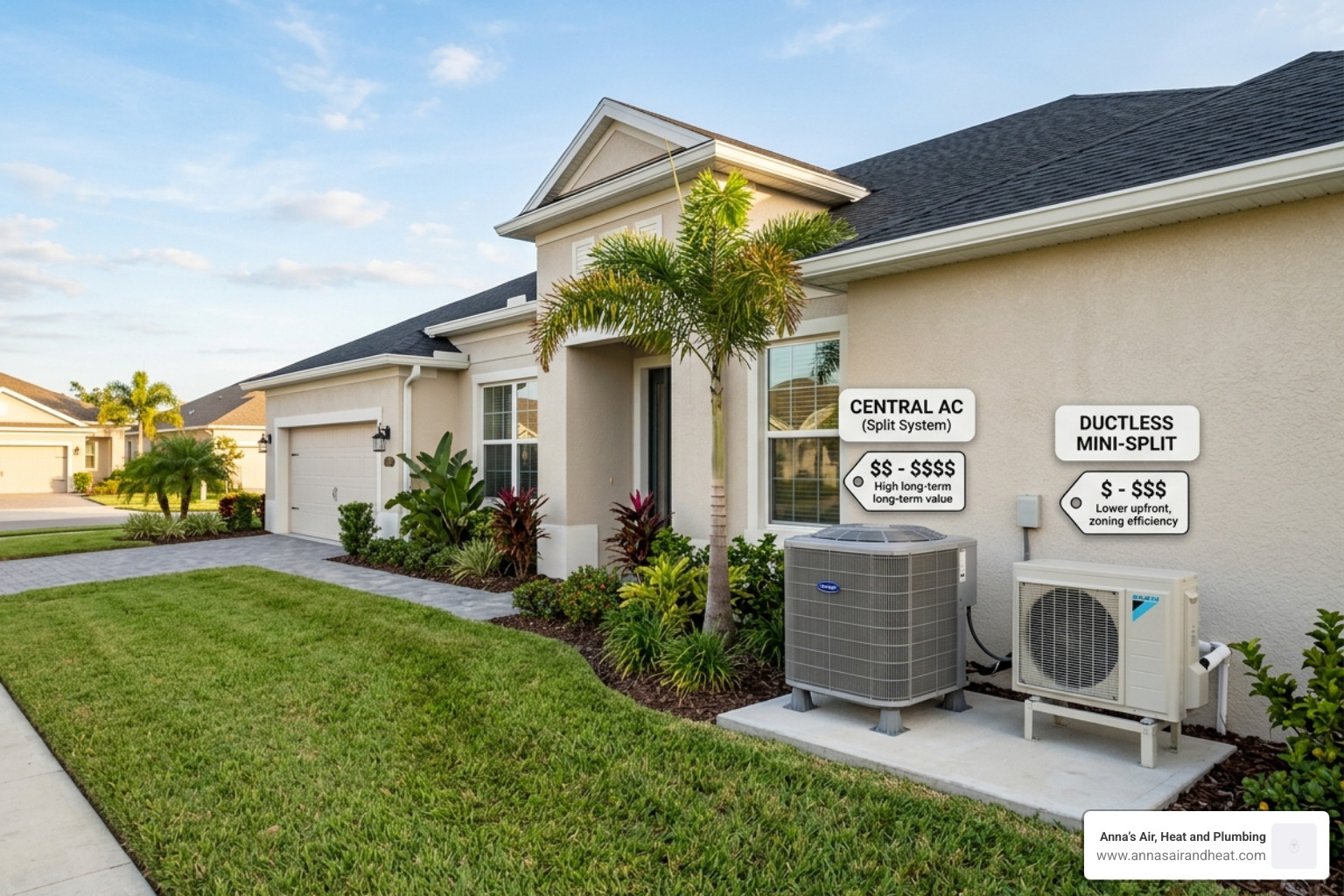
Mini split vs central AC cost comparison is one of the most common questions Melbourne, FL homeowners ask when it’s time to upgrade their cooling system — and the honest answer is: it depends on your home’s existing setup.
Here’s a quick side-by-side to help you decide:
| Factor | Mini Split | Central AC |
|---|---|---|
| Best for homes with existing ductwork | No | Yes |
| Best for homes without ductwork | Yes | No (very costly to add) |
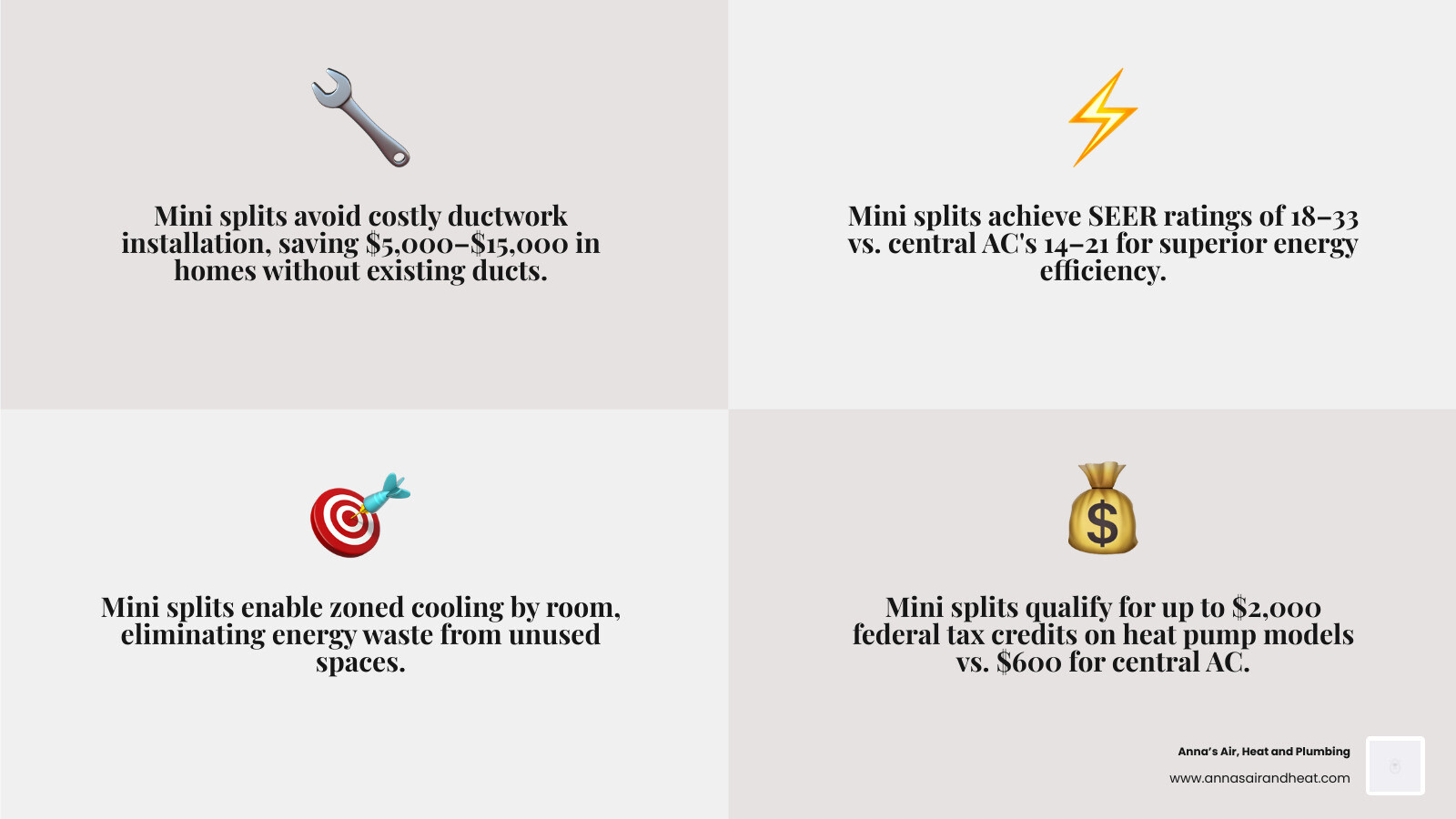
| Energy efficiency (SEER range) | 18–33 | 14–21 |
| Installation complexity | Low to moderate | Moderate to high |
| Zoned temperature control | Yes (by room) | Limited |
| Long-term energy savings | Higher | Lower |
| Lifespan | 15–20 years | 15–20 years |
| Federal tax credit eligibility | Up to $2,000 (heat pump models) | Up to $600 |
The single biggest cost driver in this comparison isn’t the equipment itself — it’s whether or not your home already has ductwork. Homes with good existing ducts often find central AC to be the more straightforward replacement. Homes without ducts can save significantly by going ductless, since adding new ductwork to an existing structure can be a major expense and a major disruption.
On top of installation, there’s energy efficiency to consider. Mini splits use inverter-driven, variable-speed compressors that adjust output continuously, while most central AC units run at a fixed speed. Duct systems also lose a meaningful share of conditioned air through leaks and poor insulation before it ever reaches your living space — a real concern in Florida’s year-round heat.
Add in zoning flexibility, federal incentives, and long-term operating costs, and the full picture becomes more nuanced than a single price tag can show.
This guide breaks it all down — so you can make a confident, well-informed decision for your home.
Initial Installation and Complexity: Mini Split vs Central AC Cost Comparison
When we look at the mini split vs central ac cost comparison from an installation standpoint, we have to talk about what happens behind your walls. Central air conditioning is a “whole-home” solution that relies on a network of ducts to distribute air. If your home in Satellite Beach or Viera already has these ducts in good condition, replacing the unit is a relatively standard procedure.
However, if you are living in an older home that was built before central air was standard, or if your current ducts are falling apart, the complexity—and the investment—skyrockets. Installing new ductwork is an invasive process. It requires cutting into ceilings, taking up closet space, and often involves several days of construction.
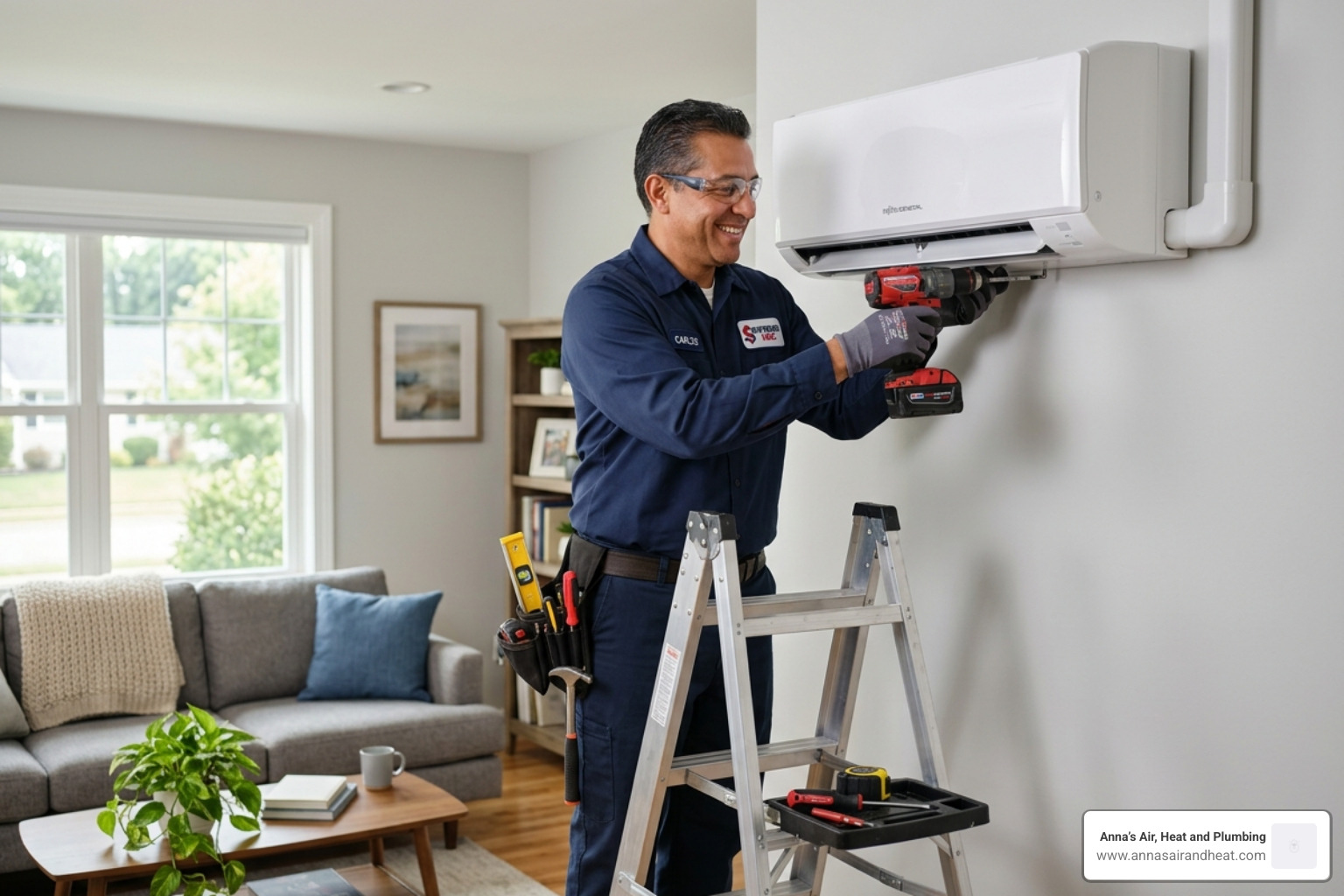
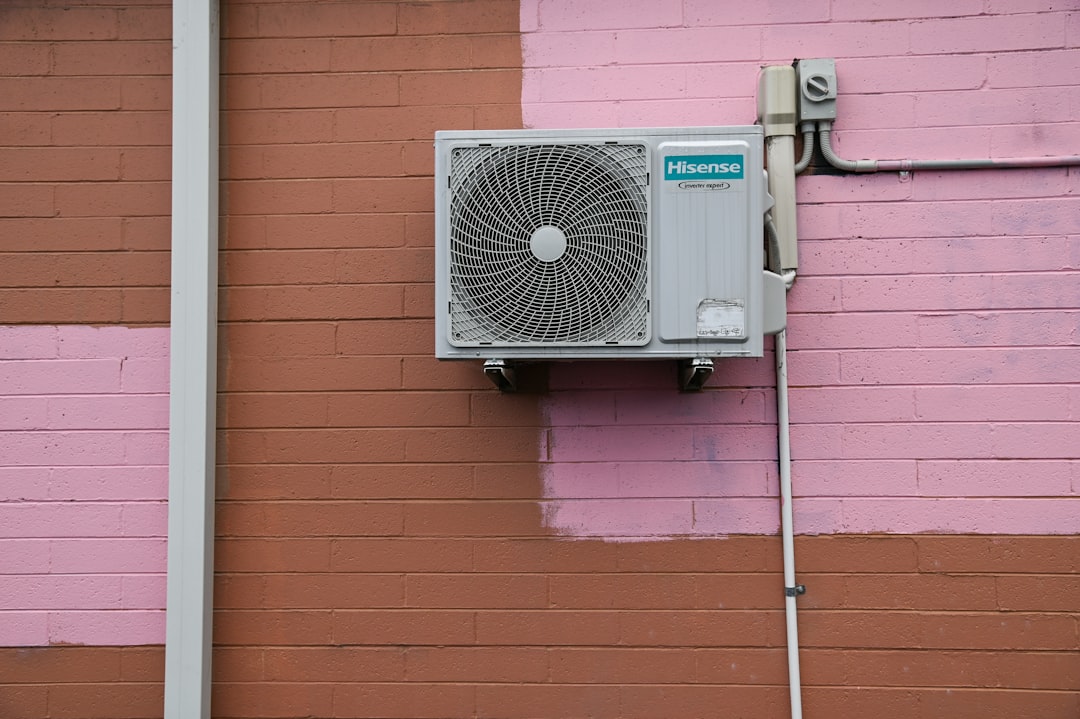
In contrast, a mini split system is “ductless.” It consists of an outdoor compressor connected to one or more indoor air handlers by a small conduit. This conduit only requires a three-inch hole in the exterior wall. Because there are no ducts to run, the labor is significantly less intensive. We often find that a single-zone mini split can be up to speed in just a few hours, whereas a full central system with new ducts could take a week.
| Installation Feature | Central AC (With Ducts) | Mini Split (Ductless) |
|---|---|---|
| Structural Impact | High (requires wall/ceiling access) | Low (3-inch hole in wall) |
| Labor Intensity | High | Low to Moderate |
| Timeframe | 3–5 days (if adding ducts) | 1–2 days |
| Equipment Footprint | Large indoor air handler + ducts | Small wall-mounted heads |
For many of our neighbors, the choice comes down to the “hidden” labor. If we have to rebuild your attic’s infrastructure to support a central unit, the AC Installation becomes a much larger project than simply mounting a sleek mini split head on the wall.
Evaluating the Mini Split vs Central AC Cost Comparison for New Additions
Are you finally finishing that garage in Palm Bay or adding a sunroom to your Merritt Island home? This is where the mini split vs central ac cost comparison shifts heavily in favor of ductless technology.
Extending your existing central AC to a new room addition is rarely as simple as “tapping into” a duct. Your current AC unit was sized specifically for your home’s original square footage. Adding a new room often means the old unit won’t be powerful enough to cool the extra space. This could force you to replace your entire central system prematurely just to accommodate one new room.
A Ductless HVAC system acts as a standalone solution for these spaces. You don’t have to worry about your main system’s capacity, and you get independent temperature control for that specific area. This “zoning” means you aren’t paying to cool the guest suite or the workshop when nobody is using them.
Why Existing Ductwork Shifts the Mini Split vs Central AC Cost Comparison
If you are lucky enough to have a home with a modern, well-sealed duct system, central AC is often the most cost-effective path for a full-home replacement. Central systems excel at moving large volumes of air and maintaining a uniform temperature across a 2,500-square-foot floor plan.
However, duct integrity is a major “if.” The Department of Energy estimates that typical duct systems lose 20% to 30% of conditioned air through leaks, poor connections, and uninsulated runs. In the humid Florida climate, leaky ducts in an attic can also pull in hot, moist air, leading to indoor air quality issues.
When we visit homes for A Breath of Fresh Air Local Ductless Mini Split Companies in Palm Bay, we often evaluate the “duct tax.” If your ducts are wasting 30% of your energy, a mini split might actually provide a better return on investment over time, even if you already have the infrastructure for central air. Mini splits deliver air directly into the room, meaning 100% of the cooling you pay for actually reaches you.
Efficiency and Long-Term Operating Value
In HVAC, efficiency is measured by the SEER2 (Seasonal Energy Efficiency Ratio) rating. Think of it like MPG for your car. The higher the number, the less electricity the unit uses to keep you cool.
As of April 2026, the standards for efficiency have reached impressive heights. While modern central AC systems typically range from 14 to 21 SEER2, mini split systems often start at 18 and can soar as high as 33 SEER2.
Why the big gap? It comes down to two main technologies:
- Inverter Technology: Most mini splits use variable-speed compressors. Instead of turning on at 100% and shutting off completely (like a traditional central AC), they ramp up and down smoothly. They find the exact speed needed to maintain your temperature, which uses significantly less power.
- Elimination of Duct Loss: As we mentioned, ducts are inherently wasteful. By removing the middleman, mini splits ensure no energy is lost in the attic or crawlspace.
When you factor in the 3 Benefits of Ductless Mini Splits in Palm Bay FL, the monthly utility impact becomes clear. Homeowners who switch to high-efficiency ductless systems often see a reduction in their cooling-related electricity usage by 30% or more. Over a 10-to-15-year period, those monthly savings can eventually cover the difference in the initial purchase price.
Total Ownership: Maintenance, Lifespan, and Incentives
Choosing a cooling system is a long-term relationship. Both central AC and mini split systems generally last between 15 and 20 years, provided they receive regular professional care. However, the maintenance routines differ slightly.
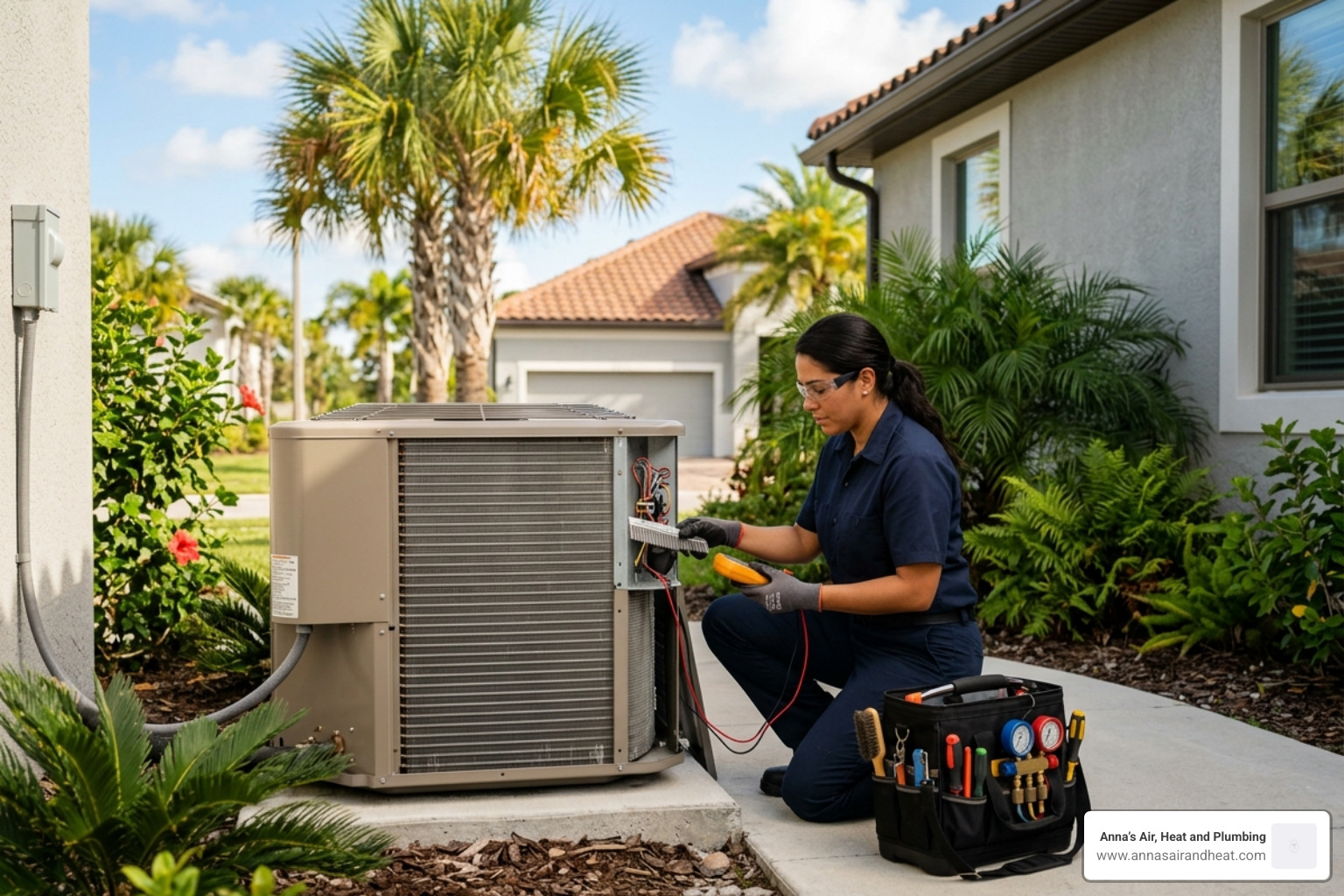
Central AC systems require quarterly filter changes and annual duct inspections. If you live in Cocoa Beach or Indialantic, the salt air can be particularly tough on the outdoor condenser, making annual professional tune-ups essential to prevent corrosion.
Mini splits require a bit more “hands-on” attention from the homeowner. Because the indoor units are smaller, their filters need to be rinsed out every two to four weeks during the peak of summer. Neglecting this can lead to reduced airflow and even mold growth inside the unit. On the plus side, because there are no ducts, you’ll never have to pay for professional duct cleaning.
One of the most exciting parts of the mini split vs central ac cost comparison in 2026 is the availability of financial incentives. Under the Inflation Reduction Act, many energy-efficient heat pump mini splits qualify for a federal tax credit of up to $2,000 per year. Central AC units also qualify for credits, but they are typically capped at a much lower amount, around $600. When you add in local utility rebates available in Brevard County, the “effective cost” of a premium ductless system becomes much more competitive.
We always encourage our clients to look at the “total cost of ownership.” If you’re Debunking 5 Myths About Ductless Mini Splits in Cocoa Beach FL, you’ll realize that the higher upfront investment of a multi-zone mini split is often offset by superior warranties (often up to 12 years for parts) and those significant tax breaks.
Beyond the Financials: Comfort and Air Quality
While the mini split vs central ac cost comparison is vital, your daily comfort is what you’ll notice most. There are several “lifestyle” factors that don’t always show up on a spreadsheet but make a massive difference in a Florida home.
Noise Levels: Central AC systems can be loud. You hear the “whoosh” of air through the vents and the clatter of the unit turning on. Mini splits are whisper-quiet. Many indoor units operate at decibel levels as low as 19 dB—that’s quieter than a library. If you are a light sleeper or work from home in Rockledge, this is a game-changer.
Humidity Control: In Melbourne, humidity is our constant companion. Because mini splits run at variable speeds, they spend more time “dehumidifying” the air rather than just cooling it. They pull moisture out of the air more consistently than a standard on/off central system, which helps prevent that “clammy” feeling indoors.
Aesthetics and Space: Some homeowners prefer the “invisible” nature of central AC—only the vents are visible. Others appreciate the sleek, modern look of wall-mounted mini splits. For homes with limited attic or closet space, going ductless frees up valuable real estate that would otherwise be occupied by a bulky air handler and oversized ducts. This is exactly Why Rockledge Homeowners Are Going Ductless This Year.
Frequently Asked Questions about Cooling Systems
Which system is quieter for a bedroom or home office?
Hands down, the mini split is the winner here. Because the loudest components (the compressor and fan) are located outside, and the indoor unit uses a cross-flow fan designed for silence, you will barely notice it’s running. Central AC systems often create “duct noise” and a noticeable vibration when they kick on, which can be disruptive in a quiet office setting.
Can a mini split system provide efficient heating during Florida winters?
Absolutely. Most mini splits installed today are actually “heat pumps.” They are incredibly efficient at providing warmth during those chilly January nights in Brevard County. In fact, they are much more efficient than the electric heat strips found in many older central AC systems. They move heat rather than generating it, which is a much more energy-conscious way to stay cozy.
How does the installation time differ between these two systems?
If your home already has ducts, a central AC replacement is a one-day job, usually taking 6 to 8 hours. If we have to install new ducts, that timeline jumps to 3 to 5 days. A single-zone mini split is our fastest install, often completed in about 4 hours. A multi-zone system for a whole house usually takes 1 to 2 days, depending on how many rooms we are connecting.
Conclusion
Choosing between a mini split and central air is a big decision, but you don’t have to make it alone. At Anna’s Air, Heat & Plumbing, we take pride in being a woman-owned business that treats your home like our own. Whether you’re in Melbourne, Rockledge, or Merritt Island, we focus on providing honest advice and reliable service that prioritizes your long-term comfort over a quick sale.
Every home is unique. A mini split vs central ac cost comparison that works for your neighbor might not be the right fit for your 1950s ranch or your brand-new addition. That’s why we offer professional consultations to help you weigh the installation complexity, energy savings, and lifestyle benefits of each system.
Ready to find the perfect cooling solution for your Florida lifestyle? We offer same-day new system installs and a 365-day money-back guarantee to ensure you stay cool with total peace of mind. Give us a call today to explore our Ductless HVAC options or to schedule a high-efficiency central AC upgrade. Let’s make your home the comfortable sanctuary it deserves to be!
The Trusted Experts for All Your Comfort Needs
Call our comfort advisors today to experience the care and expertise that make Anna’s Air, Heat & Plumbing a trusted name in home comfort. Our team is ready to help you enjoy reliable service, lasting comfort, and savings you can feel.