Serving Melbourne, FL and Surrounding Areas

The 50% Rule: When to Stop Repairing and Start Replacing Your Florida AC


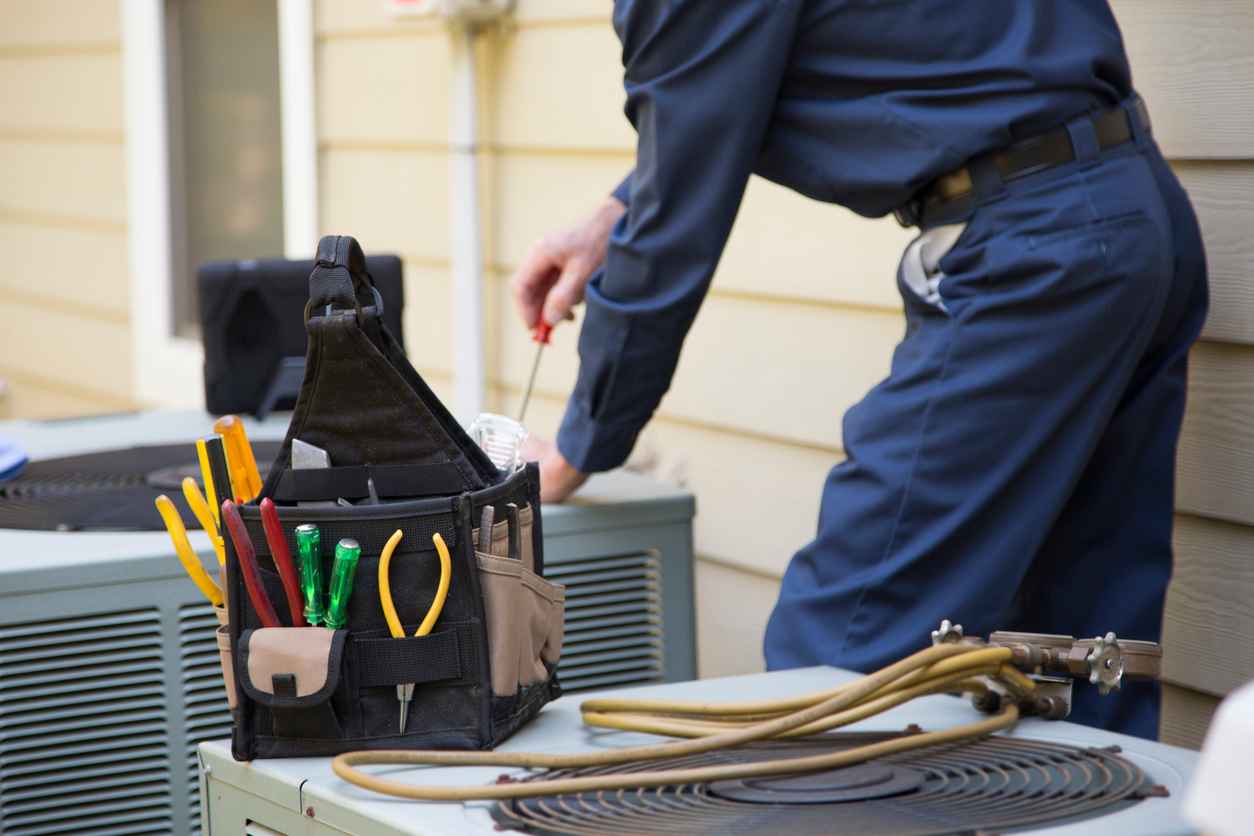
In the relentless humidity of Florida, your air conditioner is the hardest working appliance in your home. From the early heat of March through the sweltering humidity of October, your system runs almost continuously to keep your living space habitable. Because the demand on these units is so high, every homeowner eventually faces a difficult crossroads: should I pay for another repair, or is it finally time for a full replacement?
At Anna’s Air, Heat and Plumbing, we understand that a new HVAC system is a significant financial commitment. However, we also know that many homeowners inadvertently lose money by “nursing” a failing system past its prime. To help our neighbors in Florida make the smartest financial decision, we utilize a simple yet effective guideline known as the 50% Rule. This guide will explain how to apply this rule to your own system and help you recognize when your AC has officially transitioned from a reliable asset to a financial liability.
Understanding the 50% Rule
The 50% Rule is a straightforward financial formula used by HVAC professionals and savvy homeowners to determine the cost-effectiveness of a repair.
The Formula Explained
The rule states that if the cost of a single repair is 50% or more of the current value of the entire system, you should opt for a replacement instead. For example, if your ten year old AC is worth approximately $2,000 in its current state, and a compressor failure results in a $1,200 repair estimate, the 50% threshold has been crossed.
- Cumulative Costs: While the 50% Rule is often applied to single repairs, we also recommend looking at your cumulative repair costs over the last 12 to 24 months. If those smaller “nuisance” repairs total more than half the value of a new unit, you are caught in a cycle of diminishing returns.
- The Warranty Gap: Most repairs on older systems only come with a 30 to 90 day labor warranty. A new system comes with a 10 year parts warranty, effectively protecting you from any further 50% Rule dilemmas for a decade.
The Florida Factor: Why Systems Age Faster Here
In many northern states, an air conditioner might last 20 years. In Florida, the environment is much more aggressive. At Anna’s Air, Heat and Plumbing, we find that the average lifespan of a local system is between 10 and 12 years.
Salt Air and Corrosion
If you live near the Gulf Coast or the Atlantic, salt spray is a major factor. Salt air is highly corrosive to the aluminum and copper fins of your outdoor condenser. Once these fins begin to crumble (a process known as “pitting”), the system can no longer release heat effectively.
High Operational Hours
In Florida, an AC unit might run for 2,500 to 3,000 hours per year. A unit in the Midwest might only run for 500 hours. This means a 10 year old Florida unit has the “mechanical mileage” of a 50 year old unit in a cooler climate. Applying the 50% Rule early is often necessary because the wear and tear is so accelerated.
When to Walk Away: Three Red Flags
Beyond the 50% Rule, there are specific mechanical “death knells” that signal it is time to stop repairing your air conditioner.
1. The R-22 Refrigerant Trap
If your air conditioner was manufactured before 2010, it likely uses R-22 refrigerant, commonly known as Freon. Due to environmental regulations, R-22 is no longer produced.
- Skyrocketing Costs: Because the supply is so limited, refilling a system with a leak can cost hundreds or even thousands of dollars.
- The Fruitless Fix: Paying for an R-22 recharge is the definition of a “money pit” because it does not fix the underlying leak. You are essentially paying for a temporary Band-Aid on an obsolete system.
2. Compressor Failure
The compressor is the heart of your AC. It is the most expensive component to replace. If your compressor fails and your unit is out of warranty, the cost of the part and the labor will almost always exceed the 50% threshold. At this stage, putting a brand new heart into an old, rusted body is rarely a wise investment.
3. Frequent Electrical “Gremlins”
If you are constantly replacing capacitors, contactors, or fan motors, your system is telling you that its internal wiring and components are failing. While these repairs are individually smaller than a compressor, they indicate that the system’s “electrical life” is over.
The Hidden Financial Benefits of Replacement
When you stop repairing and start replacing, you aren’t just getting a new warranty; you are also gaining access to modern technology that can significantly lower your monthly overhead.
SEER2 Efficiency Gains
As of 2023, the federal government updated efficiency standards to SEER2. Modern units are vastly more efficient than those built just a decade ago.
- Immediate Savings: A 10 year old unit might have been rated at 13 SEER. A modern mid-range unit is often 16 to 18 SEER2. This jump in efficiency can reduce your monthly electric bill by 20% to 40% immediately.
- Inverter Technology: New variable-speed systems can “downshift” to use less power during milder Florida days, whereas old units are always running at 100% capacity.
Enhanced Dehumidification
In Florida, comfort is more about humidity than temperature. Modern systems are designed with specialized “dehumidification modes” that pull more moisture from the air without over-cooling your home. This allows you to set your thermostat a few degrees higher while remaining perfectly comfortable.
Making the Right Call for Your Home
Is your air conditioner trying to tell you it has had enough? Do not wait for a total breakdown in the middle of a Florida heatwave. The experts at Anna’s Air, Heat and Plumbing are ready to provide a comprehensive system health check. We will give you a clear, itemized quote for repairs and a comparison for replacement so you can apply the 50% Rule with confidence.
Contact us today to schedule your assessment and stay cool all year long.
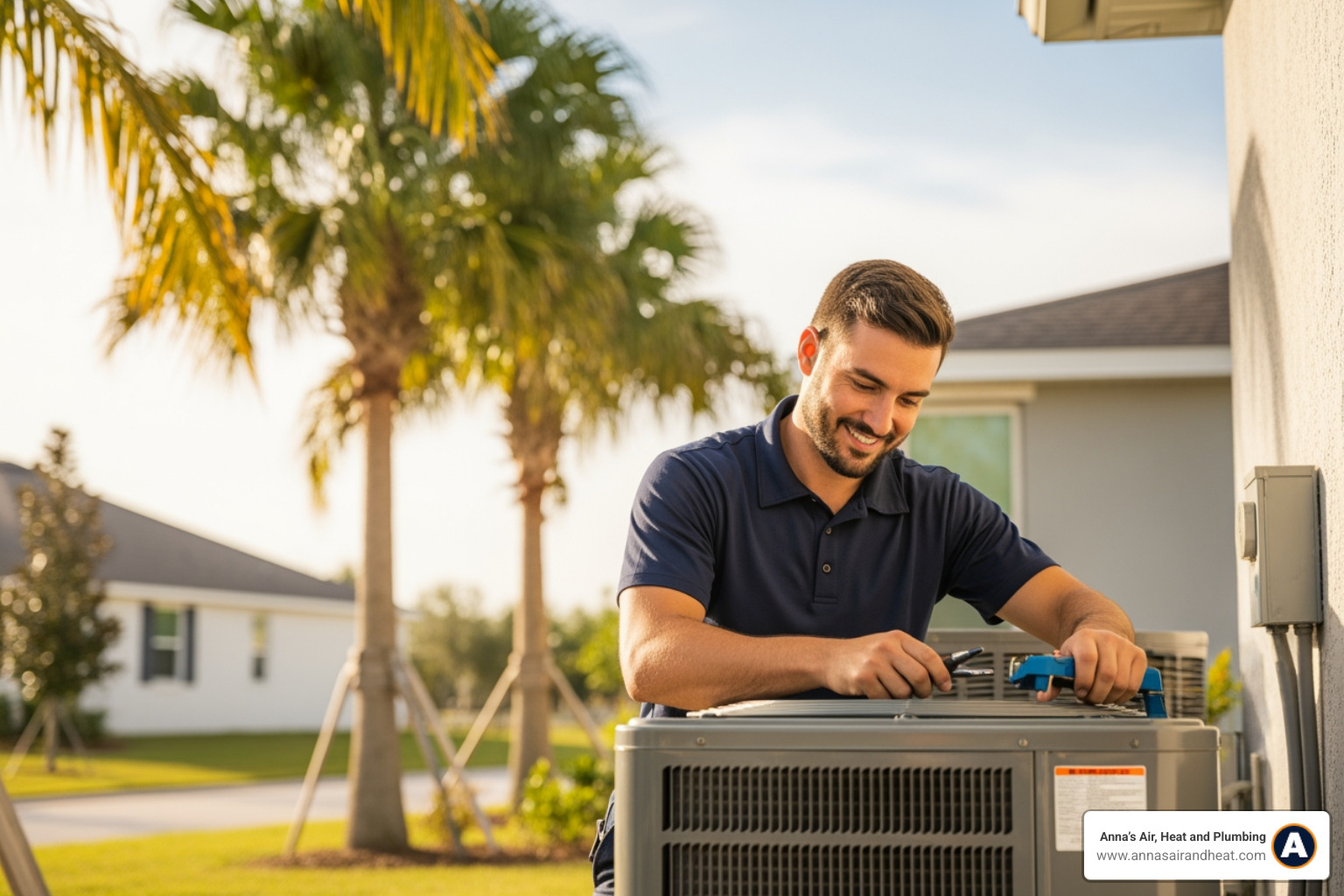
The Trusted Experts for All Your Comfort Needs
Call our comfort advisors today to experience the care and expertise that make Anna’s Air, Heat & Plumbing a trusted name in home comfort. Our team is ready to help you enjoy reliable service, lasting comfort, and savings you can feel.